Benefits of Martial Arts for ADHD and Neurodivergent Kids
Table of Contents
- What Non-Competitive Martial Arts for Kids Actually Looks Like
- Building Confidence and Focus Without the Pressure to Win
- Benefits of Martial Arts for ADHD and Neurodivergent Children
- How Brain Gym Can Help Children Be More Ready To Learn
- Martial Arts for Autism Spectrum Disorder: What Parents Should Know
- How to Choose a Martial Arts School for Special Needs
- Spotting a Truly Non-Competitive School During a Trial Class
- Frequently Asked Questions
Last Updated: September 18, 2026
What Non-Competitive Martial Arts for Kids Actually Looks Like
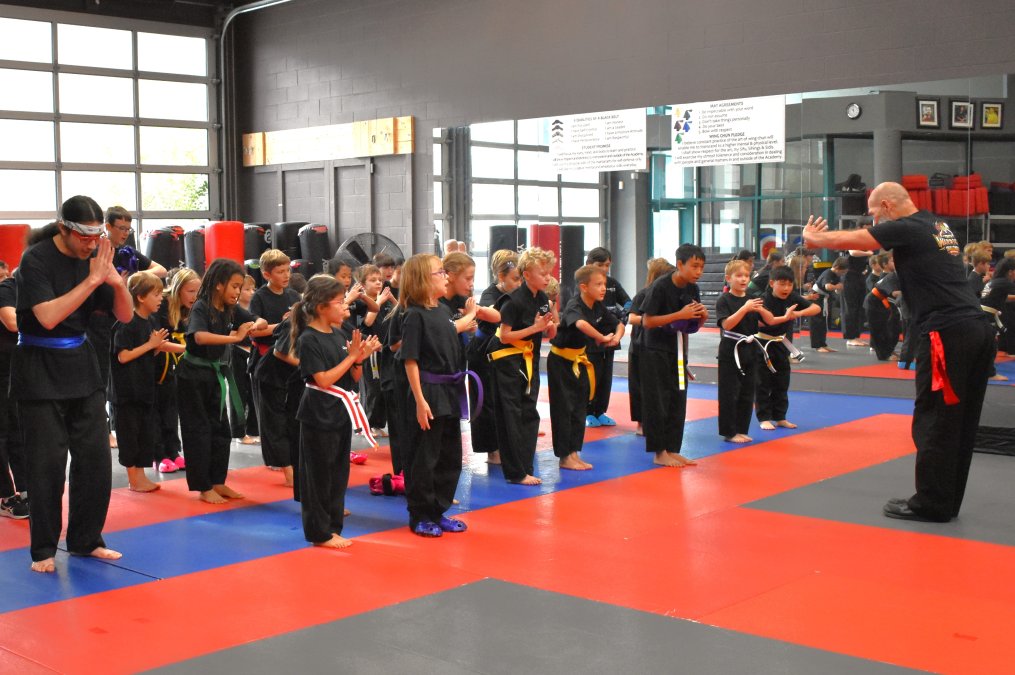
Non-competitive martial arts for kids is training that measures a child only against their own last attempt. There are no tournaments, no travel, and no win-loss record. At Great Way Martial Arts, we've taught in Kelowna since 1993, and the classes that change kids most are the ones where nobody is ranked.
Here's the part most parents get wrong. A school can call itself non-competitive and still run a scoreboard in its head. The real test is what happens when a child struggles with a drill. In a competitive room, they fall behind the group. In a non-competitive room, the instructor adjusts the drill.
That difference matters most for kids who learn differently. Many children with autism or ADHD find traditional team sports overwhelming. The noise, the fast pace, and the constant comparison drain them fast. A structured, competition-free class removes those pressures while keeping the routine they need.
What stays the same in these programs:
- A set warm-up and class order, so kids know what comes next
- Belt goals based on personal progress, not placement
- Partner work that teaches control instead of winning
- Instructors trained to read visual, auditory, and kinesthetic learners
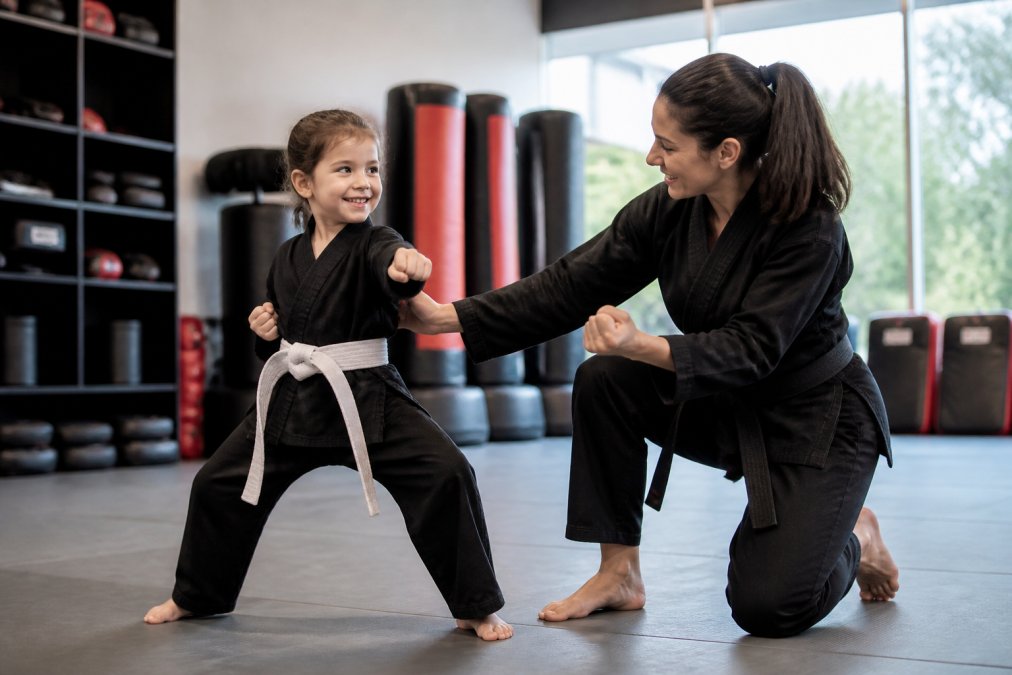
Smiling child practicing a gentle stance with an instructor during a non-competitive martial arts class in a studio.
Building Confidence and Focus Without the Pressure to Win
Confidence in martial arts comes from repetition, not trophies. A child who can hold a stance they couldn't hold last month has proof of progress they can feel. That proof does more for self-esteem than a medal.
Competitive environments can work against this. When a child loses often, the sport starts to feel like a verdict on them. Non-competitive training separates effort from outcome. The goal is simple: show up, try the drill, get a little better.
This is where confidence building gets practical. Instructors break skills into small steps. Each step is a win. Over a term, those small wins stack into real self-belief.
Focus grows the same way. Short, clear tasks train attention better than long, open-ended ones. A drill that lasts two minutes and has one job is easier to lock onto than a scrimmage with ten moving parts.
Benefits of Martial Arts for ADHD and Neurodivergent Children
For children with ADHD, the benefits of martial arts go far beyond fitness. The structured, repetitive movements and clear rules provide a framework that helps regulate attention and impulse control in ways that many other activities cannot.
The predictability of a non-competitive class is equally important. Children with ADHD often struggle with transitions and unexpected changes. A class that follows the same warm-up, the same sequence of drills, and the same cool-down every week reduces anxiety and frees up mental energy for learning. Instructors in these settings are trained to give one instruction at a time, demonstrate rather than lecture, and use visual cues alongside verbal ones.
What parents tend to notice first:
- Improved focus during the class itself, which often carries over into homework time
- Greater patience with instructions at home, as children practice waiting their turn
- A calmer routine around class days, because the structure provides a predictable anchor
- Small but steady gains in coordination and body awareness, which boost confidence in other physical activities
One of the less obvious benefits is the social aspect. In a non-competitive environment, children with ADHD are not labeled as the "hyper" or "distracted" kid. They are simply participants. Partner drills teach turn-taking and reading social cues without the pressure of winning or losing. Over time, this can lead to genuine friendships and a sense of belonging that carries into school and home.
It's also worth noting that many children with ADHD are kinesthetic learners; they understand the world through movement. Martial arts speak their language. When a technique is shown and then practiced, the learning is immediate and embodied. This can be a revelation for kids who have struggled in traditional classroom settings. Providing a consistent physical outlet through martial arts equipment helps these students anchor their focus and channel their natural energy into productive patterns.
For parents considering martial arts for a child with ADHD, the key is to look for a program that emphasizes routine, offers clear behavioral expectations, and has instructors who understand that focus is a skill to be built, not a prerequisite. When those elements are in place, the dojo or studio can become a place where your child thrives.
How Brain Gym Can Help Children Be More Ready To Learn
Brain Gym is a set of simple, structured movements that aim to support brain function by improving coordination between the body and different parts of the brain. For divergent children—such as those with ADHD, autism, dyslexia, or other learning differences—these movements can help calm the nervous system, increase focus, and support better self-regulation. Cross-lateral exercises (like touching the right hand to the left knee) are believed to stimulate communication between the brain’s hemispheres, which may support skills like reading, writing, listening, and organizing thoughts. Because the movements are easy to learn and repeat, children can quickly gain a sense of mastery and control over their bodies, which can in turn boost their confidence in learning situations.
Brain Gym activities can also offer divergent children a predictable physical routine that makes the classroom or home learning environment feel safer and more manageable. Short movement breaks give them a chance to release excess energy, reduce anxiety, and reset their attention before returning to tasks that require sustained concentration. This can be especially helpful for children who struggle with sitting still for long periods or who become easily overwhelmed. Although the scientific evidence for Brain Gym is mixed and it should not replace specialized therapies or tailored educational support, many parents and teachers report that integrating brief Brain Gym sequences into the day helps these children feel more engaged, settled, and ready to learn.
Martial Arts for Autism Spectrum Disorder: What Parents Should Know
Martial arts can be a transformative activity for autistic children when the environment is designed with sensory and communication needs in mind. The key is finding a program that prioritizes predictability, flexibility, and genuine inclusion over rigid tradition.
Autistic children often thrive with routine, and a well-structured martial arts class builds routine into every session. The same warm-up, the same order of drills, and the same closing ritual create a safe container. But routine alone is not enough. Instructors must also be trained to adapt to sensory sensitivities and communication differences.
A common mistake is assuming a child must "keep up" with a group. In a non-competitive school, they don't. Instructors can slow a drill, repeat a demonstration, or use a visual cue instead of a spoken one. They can also offer a quiet space or a break when a child needs one, without making it a big deal. This flexibility is what separates a truly inclusive program from one that simply tolerates difference.
When evaluating a school, look for these specific features:
- Instructors who demonstrate rather than only explain, and who use clear, literal language
- A sensory-friendly environment: consider lighting, noise levels, and the texture of mats or uniforms
- Consistent routines from week to week, with advance notice of any changes
- Small class sizes with room to move, and a designated quiet corner if needed
- A policy of no tournaments, no rankings, and no pressure to compete
- Staff who are trained in autism awareness or have experience with neurodivergent learners
Guidance from organizations like Autism Canada highlights the value of structured, sensory-aware activities for autistic children. Martial arts fits that model when the school pays attention to individual needs. For example, some children may find the sound of a striking pad overwhelming; an instructor can offer a quieter alternative. Others may need extra time to process a instruction; a pause and a repeat can make all the difference.
The goal is not to fix anything. It's to give a child a place where their learning style is an asset, not a problem.
If you're considering martial arts for your autistic child, start by observing a class without your child. Watch how the instructor interacts with students who struggle. Ask about their experience with neurodivergent kids. A good school will welcome your questions and may even offer a private tour or a modified trial.
How to Choose a Martial Arts School for Special Needs
Choosing a martial arts school for special needs comes down to three things: the instructors, the structure, and the pace. A school that adapts to your child will beat a famous name every time.
Ask direct questions before you commit:
What to Check | Why It Matters | Green Flag |
|---|---|---|
Instructor training | They need to adapt to different learners | Trained to teach visual, auditory, and kinesthetic styles |
Class structure | Predictable routines lower anxiety | Same warm-up and order each week |
Competition policy | Pressure to compete can undo progress | No tournaments, travel, or rankings |
Trial class | You see the real room, not the pitch | Your child is welcomed, not evaluated |
Pace | Kids learn at different speeds | Drills adjusted per child |
Spotting a Truly Non-Competitive School During a Trial Class
A trial class tells you more than any brochure. You can spot a genuinely non-competitive school in about ten minutes if you know what to watch for.
Watch for these signals:
- Kids helping each other instead of racing
- Praise aimed at effort, not results
- Belt progress tied to personal goals
- No talk of upcoming tournaments
- Instructors using names and eye contact
Frequently Asked Questions
What is the best age for a child to start non competitive martial arts?
Most children are ready between ages 4 and 6, when they can follow simple instructions and participate in group activities. Programs like Kung Fu Cubs for ages 4-5 and Dragons for ages 6-7 introduce basic movements and listening skills without pressure. Older children ages 8-11 often thrive in Champions Kung Fu, which builds on focus and coordination. The right age depends on your child's attention span and interest, not a strict number.
Can martial arts help with sensory processing in children?
Yes. Many children with sensory processing differences benefit from the structured movement, body awareness drills, and predictable routines found in non competitive martial arts. Instructors who understand neurodivergent learners can adapt pacing, lighting, and noise levels to reduce overwhelm. The repetition of forms and gentle stretching also supports motor planning and coordination. Look for programs that use visual schedules and allow breaks when needed.
How do instructors adapt martial arts training for divergent learners?
Skilled instructors break movements into small steps, use visual demonstrations, and offer verbal cues alongside physical guidance. They may incorporate tools like Brain Gym exercises to support focus and self-regulation. Classes for autism spectrum disorder often include predictable routines, quiet spaces, and clear expectations. A good instructor will ask about your child's specific needs and adjust teaching methods to match how your child learns best, whether visually, auditorily, or kinesthetically.
Why is a non-competitive environment better for children with autism?
Non competitive settings remove the anxiety of tournaments and rankings, which can overwhelm children with autism. Instead, students progress at their own pace and earn recognition for personal effort. This reduces stress and makes it easier to focus on building skills like self-control, respect, and conflict resolution. Many parents report that their children feel safer and more willing to try new things when the pressure to win is gone.