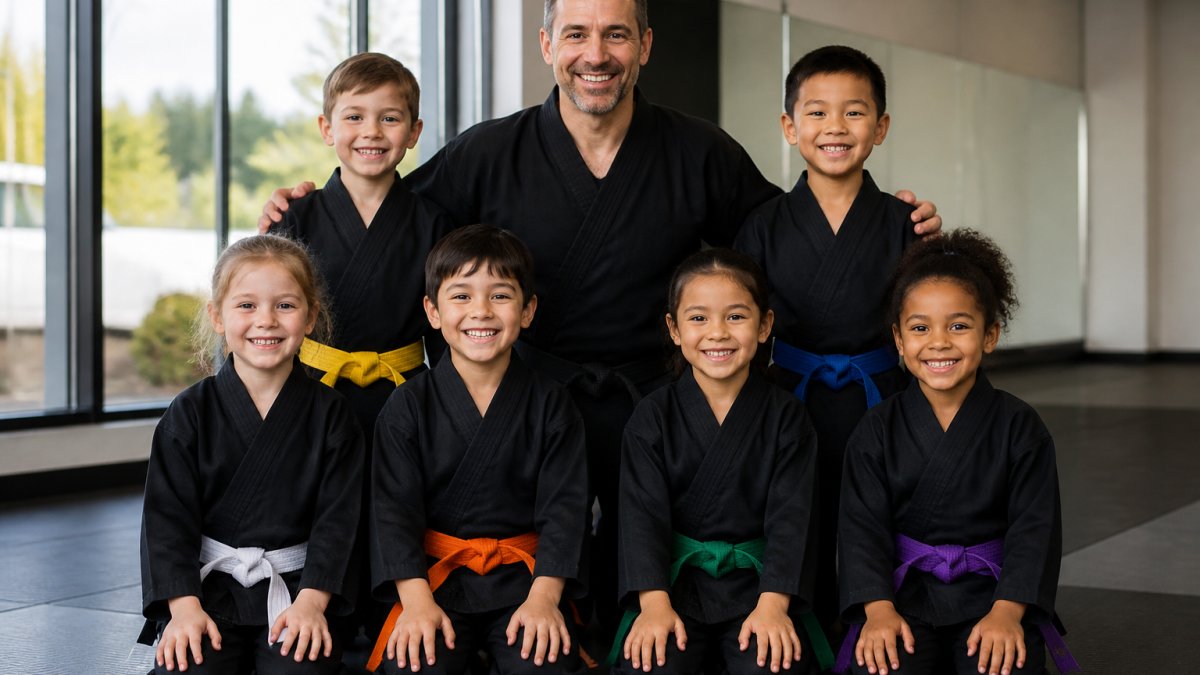
Best Martial Arts for 6 Year Olds: A Parent's Guide
Table of Contents
- Why Martial Arts Fit 6-Year-Olds So Well
- The Best Martial Arts for 6-Year-Olds Compared
- How to Choose a Martial Arts School for Kids
- Kids Martial Arts Class Safety: What Parents Should Check
- What a Great First Year Looks Like for a 6-Year-Old
- Frequently Asked Questions
Last Updated: October 5, 2026
Why Martial Arts Fit 6-Year-Olds So Well
Six is the sweet spot for starting martial arts. At this age, children have enough coordination to learn real technique, enough focus to follow multi-step instructions, and enough social awareness to work with a partner without dissolving into giggles every thirty seconds. That combination does not last forever, which is why so many parents start looking at martial arts for 6 year olds right around kindergarten and Grade 1.
This guide from Great Way Martial Arts, a Kelowna studio that has taught local children since 1993, breaks down the main styles, what to check at any school, and how to spot a program that will still hold your child's interest six months from now.
A common mistake is treating martial arts as just another after-school activity. It is closer to a long-term character habit. Children who stick with it tend to build focus, patience, and physical confidence that carries into the classroom.
Martial arts for 6 year olds is structured instruction in a traditional fighting discipline, adapted for young children through shorter drills, games, and clear progression goals. The style matters less than the teaching.
The Best Martial Arts for 6-Year-Olds Compared
There is no single best style, I.E., Kung Fu, Karate, Tae Kwon Do, Judo, Ju Jitsu, etc., but there are clear differences in pace, contact level, and what each discipline emphasizes.
Kung Fu
Kung Fu covers a wide family of styles, often blending stances, hand techniques, and fluid movement. It tends to feel less rigid than karate, which suits kids who like variety.
Mixed programs pull techniques from several styles. Great Way Martial Arts blends more than ten styles, including Wing Chun, in a curriculum built specifically for children. That approach lets a six-year-old sample different movements instead of committing to one rigid system. Age-based tracks like Kung Fu Cubs (Ages 4-5) | Dragons (Ages 6-7) keep the material matched to where a child actually is developmentally.
How to Choose a Martial Arts School for Kids
Choosing a martial arts school for kids comes down to three things: the instructor, the class format, and whether the culture matches your child. Style is a distant fourth.
Start by asking these questions on your first visit:
- How long has each instructor been teaching, and do they stay long-term?
- What is the student-to-instructor ratio for a six-year-old class?
- Does the school run competitions, and is my child expected to attend them?
- How does the school handle a child who is shy, distracted, or learning differently?
- What does progress look like in the first six months?
- Can we try a class before committing?
That last question matters most. A trial class shows you how instructors talk to children, how they manage a wiggly group, and whether the room feels welcoming or intimidating.
For families in Kelowna, geography is a real factor. A program twenty minutes across town sounds fine until you are driving it three times a week in winter. Look for a school near your home or your child's school so the routine actually holds.
If you are searching for martial arts for kids near me, start with the studios closest to you, then compare teaching quality rather than distance alone.
Kids Martial Arts Class Safety: What Parents Should Check
Kids martial arts class safety starts with the mat, the instructor's certifications, and how the school handles injuries and behavior. A well-run studio treats safety as routine, not as a selling point.
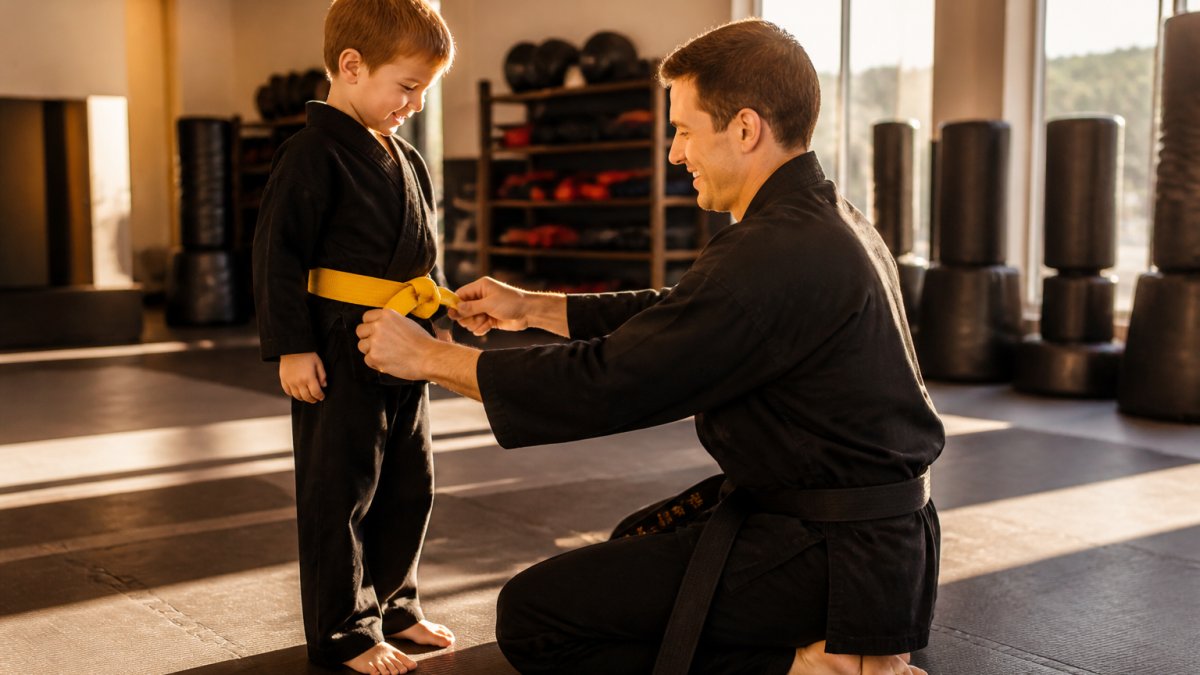
Walk in and look at the physical space first. Mats should be clean and properly fitted, with no gaps or curled edges that trip small feet. Equipment like pads and bags should be in good repair.
Then watch how the class runs. Instructors should warm students up before any hard activity, pair children by size for contact drills, and stop rough play immediately. For a six-year-old, most contact should be light and controlled, with no full sparring until skills and maturity are in place.
Ask about first aid. Staff should know how to respond to a bumped head or a twisted ankle, and the school should have a clear process for contacting parents. In British Columbia, youth sports organizations are expected to follow viaSport's guidelines for safe sport, which cover everything from concussion protocols to conduct standards.
A quick safety checklist for any school you visit:
- Mats are clean, fitted, and free of gaps
- Children warm up before hard activity
- Contact drills are matched by size and skill
- The school has a written injury policy
- You can watch a full class before enrolling
What a Great First Year Looks Like for a 6-Year-Old
A strong first year shows up as small, steady changes rather than dramatic ones. Most children will not be the “Karate Kids” in twelve months, and that is not the point.
In the first few months, expect better listening and the ability to follow a sequence of instructions. Around the middle of the year, many parents notice improved focus at home and school, plus more physical confidence on the playground.
By the end of a good first year, a six-year-old typically can perform basic stances, strikes, and blocks, remember short routines, and show real self-control when frustrated. They may also have made friends in the class, which is often what keeps them coming back.
The goal-setting system matters here. A program that tracks progress in small steps gives a child regular wins, and those wins build the discipline that carries into everything else. Great Way Martial Arts uses a systematized goal-setting approach along with Brain Gym and Mindset Training to build focus and kindness, not just physical skill.
For parents of neurodivergent children, look for a school that adapts to visual, auditory, and kinesthetic learning styles. A child who learns best by watching needs demonstrations, not just verbal instructions. A child who learns by moving needs hands-on drills. Great Way Martial Arts trains its instructors to teach across all three.
One more thing worth knowing: a non-competitive environment suits many six-year-olds better than a tournament track. Not every child wants to compete, and a program built around personal growth rather than trophies keeps more kids engaged long term. ParticipACTION's research on physical activity for children supports the idea that enjoyment, not pressure, is what keeps kids active.
Finding the right martial arts program for a six-year-old is really about fit: the right instructor, the right pace, and a culture that builds confidence without pressure. Great Way Martial Arts has taught Kelowna children since 1993, with full-time career instructors, a goal-setting system that tracks real progress, and a competition-free environment where kids grow at their own speed. Our Dragons program for ages 6-7 is built for exactly this stage. Get started with Great Way Martial Arts and give your child a first year of steady confidence, focus, and skill.
Frequently Asked Questions
What is the best martial art for a 6-year-old?
There is no single best style for every child. Karate and taekwondo suit kids who enjoy clear structure and belt goals, while kung fu and judo programs often mix striking, balance, and grappling. The bigger factor is the school itself: class length, instructor experience, and whether the environment is supportive rather than competitive. Visit a class and watch how instructors handle a distracted or nervous child before deciding.
Are martial arts classes safe for 6-year-olds?
Yes, when the program is built for young children. Ask about padded flooring, warm-ups before activity, and whether sparring is delayed until kids have control and focus. Instructors should be trained to work with early elementary ages, and class sizes should allow real supervision. A no-contact or light-contact program removes most injury risk while still building fitness, balance, and confidence.
How often should a 6-year-old attend martial arts classes?
Once or twice a week is plenty for most 6-year-olds. At this age, consistency matters more than frequency, and a steady routine helps kids build the habit without getting overtired or losing interest. Many schools offer a trial period so you can see how your child handles the schedule. If they are thriving and asking for more, adding a second class is a simple next step.