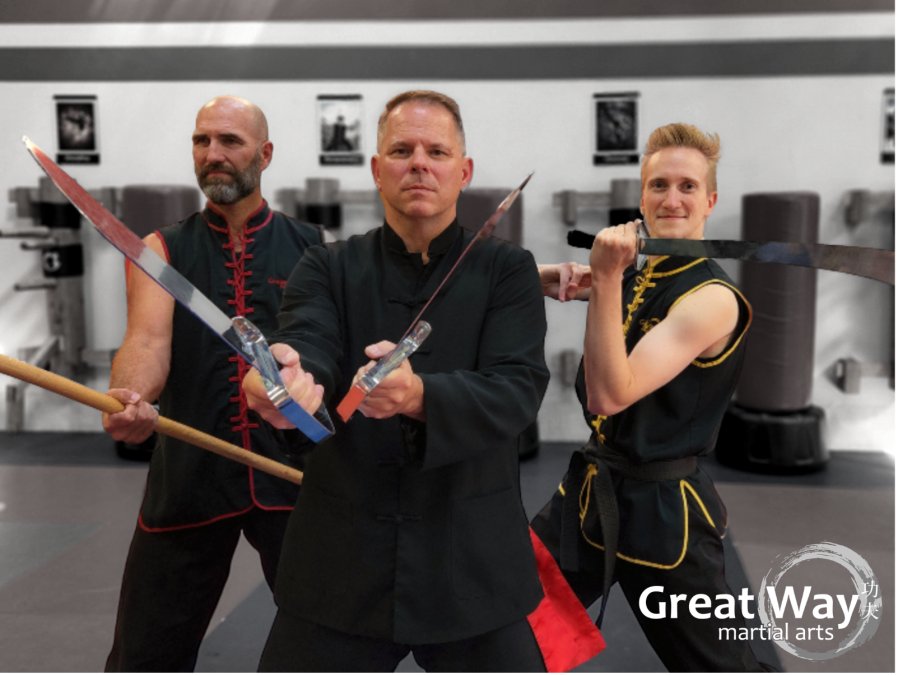
Best Martial Arts for Discipline: Kung Fu and Wing Chun
Table of Contents
- What Makes a Martial Art Good for Building Discipline?
- Discipline Through Listening, Not Fear
- Kung Fu: Focused Listening and Concentration Without Harsh Instruction
- The Benefits of Wing Chun for Mental Focus
- How Martial Arts for Focus and Concentration Train the Mind
- Mindset Training for Martial Arts Students Beyond the Mat
- Which Style Fits Your Family? A Kelowna Guide
- Frequently Asked Questions
Last Updated: September 28, 2026
What Makes a Martial Art Good for Building Discipline?
The best martial arts for discipline are the ones that build focus through listening and repetition rather than fear of punishment, which is why so many families turn to martial arts for discipline. A style that rewards attention, corrects gently, and gives students clear goals will develop self-control faster than one built on shouting and strict hierarchy.
That distinction matters more than most parents realize. When a child associates training with pressure and criticism, discipline becomes something imposed from outside. When training feels structured but safe, discipline grows from the inside.
This guide from Great Way Martial Arts in Kelowna covers what actually separates styles on this front. Below, we'll show you exactly how kung fu and Wing Chun build focused listening, concentration, and mindset skills that carry into school, work, and home life.
Discipline Through Listening, Not Fear
Discipline in martial arts comes from repeated, calm instruction that a student chooses to follow. Fear-based teaching produces short-term compliance and long-term dropout, which is why so many kids quit competitive programs within months.
A common mistake is assuming strict equals effective. In practice, harsh instruction often trains students to avoid mistakes rather than to pay attention. The result looks like discipline on the mat but disappears the moment the instructor stops watching. True internal regulation requires a shift toward personal accountability that allows a student to practice self-discipline daily regardless of external oversight.
Programs that build genuine self-control tend to share a few traits:
- Instructors correct without shaming
- Goals are broken into small, visible steps
- Students are asked to repeat and refine, not just perform
- Progress is tracked so effort has a payoff
- Listening is treated as a skill worth practicing
The Canadian Paediatric Society guidance on physical activity for children notes that structured activity supports both physical and mental development when it stays positive and age-appropriate.
Kung Fu: Focused Listening and Concentration Without Harsh Instruction
Kung fu builds discipline by making students listen closely to detailed instruction, then repeat movements until they become automatic. There's no shouting required for that to work.
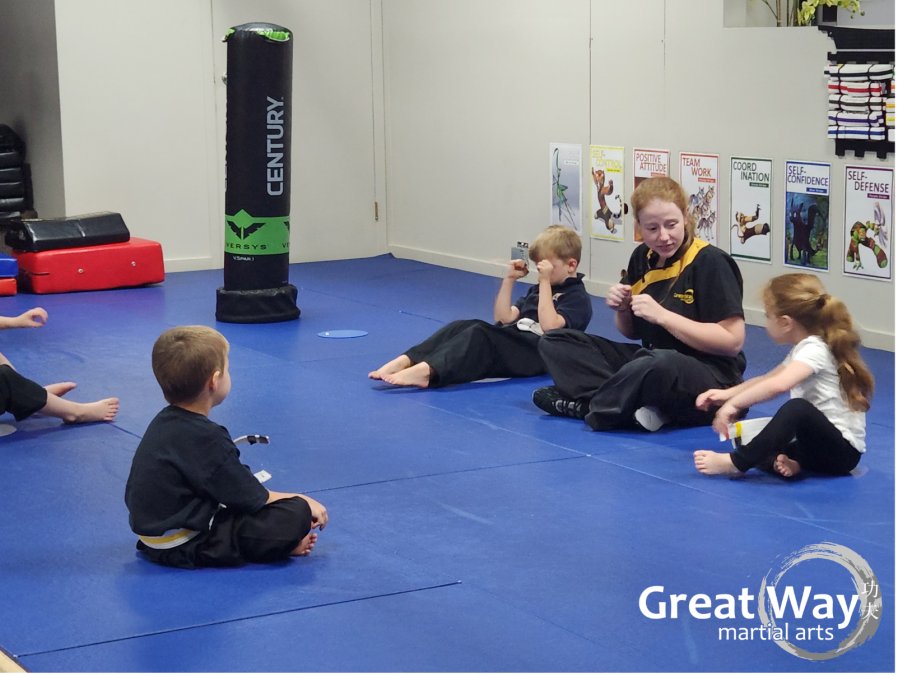
A calm, bright martial arts studio with children sitting, listening attentively to an encouraging instructor, soft natural light.
The style rewards patience. A student who rushes a form loses their balance and has to start again, so attention becomes the fastest route to progress. Over time, that habit of slowing down and listening carries into classrooms and homework.
Why Kung Fu Suits Kids Who Learn Differently
Kung fu instruction can be delivered in ways that fit visual, auditory, and kinesthetic learners. A student who struggles with "just do what I say" often thrives when they can watch a movement, hear it described, and then feel it out themselves.
That flexibility is the difference between a child who quits and one who stays. Many families find that a curriculum blending more than 10 styles, like the one used at Great Way Martial Arts, gives instructors room to adapt rather than forcing every student through one rigid format. Age-specific programs like Kung Fu Cubs (Ages 4-5) | Dragons (Ages 6-7) and Champions Kung Fu (Ages 8-11) put that approach into practice, meeting younger students where they are instead of pushing them through a one-size-fits-all class.
The Benefits of Wing Chun for Mental Focus
Wing Chun sharpens mental focus because it's built on efficiency and close-range precision. Every movement has a purpose, so a wandering mind shows up immediately as a sloppy technique.
The benefits of Wing Chun for mental focus come down to three habits:
- Economy of motion: Students learn to do more with less, which trains deliberate decision-making
- Close-range awareness: Small distances demand constant attention
- Relaxed structure: Tension ruins technique, so students learn to stay calm under pressure
For adults in Kelowna looking for stress relief, this is where Wing Chun stands apart. It's less about overpowering an opponent and more about staying composed and aware.
How Martial Arts for Focus and Concentration Train the Mind
Martial arts for focus and concentration work by turning attention into a repeatable habit. Each class asks students to hold a single task in mind, repeat it, and notice their own errors, which is the same skill used in studying and problem-solving.
The Government of Canada's guidance on children's mental health and physical activity points to structured physical activity as a support for emotional regulation and confidence in young people.
What most guides miss is that this doesn't happen automatically. Focus improves when a program deliberately teaches it. That's why goal-setting systems and structured reflection matter as much as the physical techniques themselves.
Mindset Training for Martial Arts Students Beyond the Mat
Mindset training for martial arts students is what turns a weekly class into a lasting change in behavior. Without it, students learn to punch and kick but never connect those lessons to patience at home or effort at school.
Great Way Martial Arts uses a systematized goal-setting approach alongside Brain Gym and Mindset Training to make that connection explicit. Students set targets, review progress, and learn to handle setbacks without giving up.
Here's how that translates outside the studio:
- A student who learns to reset after a mistake stops melting down over a bad grade
- A teen who practices calm breathing in class uses it before a test
- A child who waits their turn on the mat waits their turn at home
That's the part families actually notice months later, not the techniques.
Which Style Fits Your Family? A Kelowna Guide
Choosing the right style in Kelowna comes down to your goals, your schedule, and how your child learns. There's no single best answer, but there is a best fit for each family.
Style | Best For | Discipline Built Through | Watch Out For |
|---|---|---|---|
Kung Fu | Kids who learn differently | Listening, repetition, patience | Needs patient instruction |
Wing Chun | Adults seeking focus and calm | Precision, economy of motion | Slower early progress |
Students who like clear goals | Belt progression, etiquette | Can feel repetitive | |
Teens who enjoy problem-solving | Strategic thinking, humility | Steep learning curve | |
Adults wanting fitness | Conditioning, form discipline | High physical intensity |
If you're searching for martial arts near me in the Okanagan, the practical move is to visit a class and watch how instructors talk to students. Do they correct with patience or pressure? That answer tells you more than any style name.
Great Way Martial Arts has taught in Kelowna since 1993, with full-time career instructors and a competition-free environment. There are no tournaments or travel requirements, which suits families who want discipline without the pressure of a competitive circuit.
Building real discipline takes time, and the wrong environment can undo months of progress. At Great Way Martial Arts, we've spent decades helping Kelowna families develop focus and self-control through a curriculum that blends Wing Chun, kung fu, and mindset training. Our full-time instructors use a systematized goal-setting system and cater to visual, auditory, and kinesthetic learners, all without competitions or travel. Get started with Great Way Martial Arts and give your family a structured, encouraging path to confidence and self-discipline.
Frequently Asked Questions
How does martial arts training improve mental discipline?
Martial arts training improves mental discipline by repeating structured movements that require full attention. Students learn to follow instructions, correct their own form, and stay calm under pressure. Styles like kung fu and Wing Chun use slow, precise drills that build focused listening and concentration. Over time, this practice carries into schoolwork and home routines, helping students stay on task without being reminded.
Is Kung Fu better for discipline than competitive sports?
Kung Fu often builds discipline differently than competitive sports. Instead of focusing on winning or beating opponents, kung fu emphasizes personal progress, respect, and self-control. This removes the pressure that can make some children anxious or overly aggressive. A non-competitive environment lets students develop discipline through listening, repetition, and goal-setting, which many families find more sustainable long-term.
What are the benefits of non-competitive martial arts for children?
Non-competitive martial arts for children build confidence without the fear of losing. Kids learn at their own pace, which reduces stress and keeps them engaged. They develop focus, respect, and self-control through structured classes that include Brain Gym and mindset training. Without tournaments or travel, children can concentrate on personal growth, making it easier to stay committed and enjoy the process.
How does Wing Chun training improve concentration?
Wing Chun training improves concentration through close-range drills that demand precise timing and relaxed focus. Students practice slow, deliberate movements that require them to listen to their partner's energy and respond without tensing up. This builds sustained attention and mental clarity. Many students find that the focus they develop in Wing Chun helps them concentrate better at school or work.
Can martial arts help with focus in school or work?
Yes, martial arts can help with focus in school or work. The mindset training for martial arts students includes goal-setting, breathing exercises, and attention drills that transfer to daily life. Students learn to block out distractions, follow multi-step instructions, and stay calm during tests or deadlines. These skills are practiced on the mat and then applied in classrooms and offices.