How to Know if Wing Chun Is Effective for Self Defense
Last Updated: October 25, 2026
Quick Summary
Wing Chun self defense is effective for close-range situations like grabs, shoves, and tight spaces, where its straight-line strikes and centerline control work best. It is not a complete fighting system on its own, so pair it with ground training and conditioning to cover its gaps.
- Most real confrontations start within arm's reach, which is the range Wing Chun is built for.
- Wing Chun is strongest in the first two seconds of a close-range encounter and weak at long range or on the ground.
- Basic techniques become usable in live drills within three to six months of consistent training.
- Real confidence under pressure usually takes one to two years of regular practice.
- Choose a school that drills with partners, pressure-tests techniques, and discusses the system's limits openly.
Table of Contents
- Wing Chun Self Defense: What It Actually Prepares You For
- How Wing Chun Compares to Other Self-Defense Methods
- Wing Chun Self-Defense Techniques That Translate to Real Life
- Strengths of Wing Chun in a Real Fight and What Makes Great Way Different
- How Long Does It Take to Learn Wing Chun for Self Defense?
- Wing Chun Training for Real-Life Situations: What to Look For
- Choosing a Beginner-Friendly Wing Chun Class in Kelowna
- Start Your Wing Chun Training at Great Way Martial Arts
- Frequently Asked Questions
Wing Chun Self Defense: What It Actually Prepares You For
Wing Chun is a close-range martial art built for tight spaces, quick reactions, and straight-line attacks. Its self-defense value comes from one simple fact: most real confrontations start within arm's reach, not at kicking distance. At Great Way Martial Arts in Kelowna, BC, we have taught Wing Chun since 1993, and we tell every new student the same thing. Wing Chun self-defense works when you understand what it is designed to do.
So is Wing Chun effective for self-defense? Yes, for the situations it was built for.
The close-range problem Wing Chun was built to solve
Most street confrontations begin with a grab, a shove, or a punch thrown from inches away. There is no room for a big windup or a long kick. Wing Chun answers that problem directly:
- Sticking hands trains you to feel pressure and react without thinking.
- Centerline control teaches you to occupy the space between you and the threat.
- Short, straight strikes land fast in cramped quarters like doorways, hallways, and transit seats.
- Economy of motion means you are not wasting energy on moves that need space you do not have.
That is the core of Wing Chun self-defense. It is a tight, practical answer to a tight, practical problem.
How Wing Chun Compares to Other Self-Defense Methods
The honest read: Wing Chun is one of the strongest systems for the first moments of a close-range encounter. At Great Way, we pair Wing Chun with conditioning and some ground and grappling work to get the most out of it. If you are weighing your options, our Self Defense Training for Adults: A Complete Guide takes a broader look at adult self-defense training.
Wing Chun Self-Defense Techniques That Translate to Real Life
Wing Chun self-defense techniques are simple by design. They repeat under pressure, and that repetition is what makes them usable when adrenaline hits. The techniques that translate best:
- Pak sao (slap block) deflects an incoming strike and opens a counter in one motion.
- Tan sao (palm-up block) covers the centerline against a straight punch.
- Lop sao (grabbing hand) controls a wrist or forearm and pulls the attacker off balance.
- Chain punches deliver rapid straight strikes without a windup.
- Bil jee (thrusting fingers) targets the eyes and throat as a last resort.
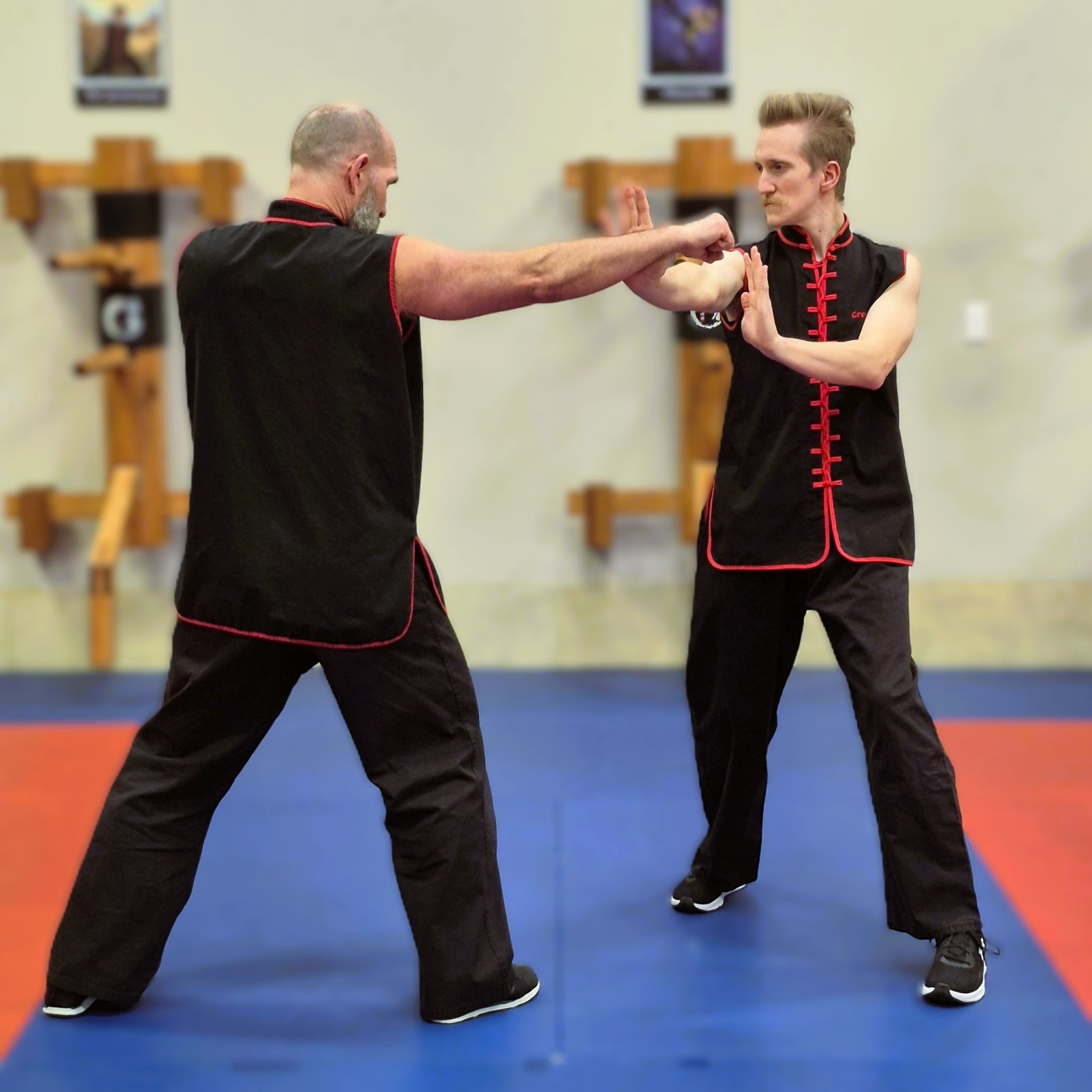
What most guides miss is that the value is not in the individual technique. It is in the drill format. Sticking hands teaches you to read pressure and adjust, which is the skill that actually shows up in a real confrontation.
Strengths of Wing Chun in a Real Fight and What Makes Great Way Different
Wing Chun is effective in a real fight when the fight stays close and stays standing. It struggles when either of those conditions breaks. That is not a flaw in the art. It is a boundary you should know before you train.
Where Wing Chun holds up well
- Tight spaces. Hallways, elevators, and packed rooms favor short-range skills.
- Surprise grabs and shoves. Sticking hands trains you to react to contact fast.
- Multiple quick strikes. Chain punching keeps pressure on without a windup.
- Smaller practitioners. Wing Chun rewards structure and sensitivity over raw size.
- Stress relief and focus. The same drills that build self-defense skill also build calm under pressure.
This is where Great Way has extra training
- Ground fighting and more. Great Way includes ground training as well as chair and wall defenses.
- Pressure Testing. For over 30 years, Great Way has included comprehensive self-defense drills and scenario-based training.
- Weapons. Great Way has complete knife, club, and bat training drills & applications.
- Conditioning. Great Way includes HIIT workouts and training drills to increase your cardio.
Watch out: students who train only forms and never pressure-test their techniques often overestimate their readiness. Live drilling is what closes that gap.
How Long Does It Take to Learn Wing Chun for Self Defense?
Most students can use basic Wing Chun self-defense techniques in a live drill within a few weeks to three months of consistent training. Real confidence under pressure takes longer, usually 6 months to a year of regular practice. The timeline depends on how often you train, how well you handle contact, and whether your school drills under pressure or only teaches forms.
A realistic breakdown:
- First month: stance, centerline, basic blocks and punches.
- Three to six months: self-defense striking techniques, drills and scenarios, partner work.
- One to two years: reflexive responses under pressure, sparring-style drills.
- Beyond that: refinement, sensitivity, and calm under stress.
Wing Chun Training for Real-Life Situations: What to Look For
Wing Chun training for real-life situations should include partner drills and pressure testing. A school that only teaches forms is teaching you choreography, not self-defense.
Use this checklist when you visit a school:
- Do students drill with a partner every class?
- Is there any pressure testing?
- Do instructors explain the real-life use of each technique?
- Are classes small enough for hands-on correction?
- Is there a beginner track, or are new students thrown in cold?
- Do students and instructors stay long-term, or is turnover high?
If a school cannot answer these clearly, keep looking.
Choosing a Beginner-Friendly Wing Chun Class in Kelowna
A beginner-friendly Wing Chun class in Kelowna should feel structured, welcoming, and free of pressure to compete. You should leave your first class knowing one or two things you did not know before, and you should not feel lost in a room of advanced students.
Here is what to check on your first visit:
- Beginner intake. Can you join any month, or do you wait for a cycle?
- Teaching style. Do instructors explain visually, verbally, and by demonstration?
- Class size. Smaller groups mean more correction and less standing around.
- Culture. Is the room competitive or supportive?
- Trial option. Can you try before committing?
Start Your Wing Chun Training at Great Way Martial Arts
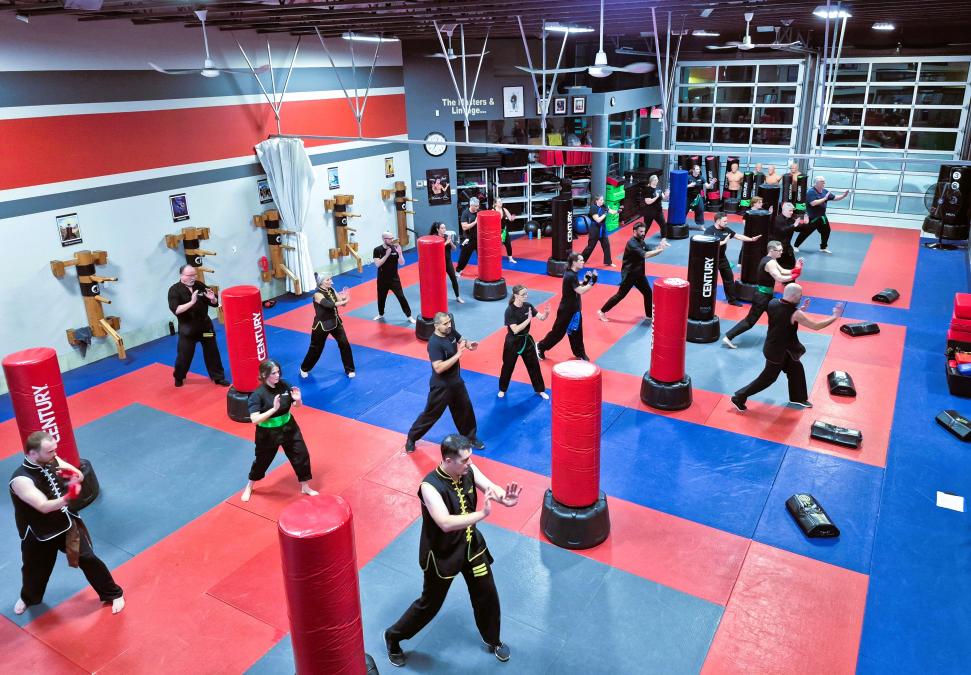
Finding a Wing Chun class that fits your goals matters more than finding the closest one. Great Way Martial Arts has taught in Kelowna since 1993, and we run a beginner-friendly Wing Chun program for adults with year-round registration. No competitions, no tournaments, no travel. Just steady training with career instructors who stay.
Our program includes:
- Systematized goal-setting so you can see progress instead of guessing.
- Brain Gym and Mindset Training to build focus and calm under pressure.
- Teaching that fits visual, auditory, and kinesthetic learners, so nobody gets left behind.
Ready to see what Wing Chun self-defense looks like in practice? Explore our Traditional Wing Chun for Adults program and book your first class. Explore our Traditional Wing Chun for Adults program and book your first class.
Frequently Asked Questions
Is Wing Chun effective for self-defense?
Wing Chun can be effective for self-defense in close-range situations, especially when training includes live drilling against resisting partners. Its focus on structure, centerline control, and quick hands suits tight spaces like hallways or crowded rooms. The catch is that effectiveness depends heavily on how the school trains. A class built only on forms and cooperative drills will not prepare you for a real confrontation, while one that adds pressure testing and scenario work gives you skills you can actually use.
How long does it take to learn Wing Chun for self-defense?
Most students need six to twelve months of consistent practice, two to three classes per week, before basic Wing Chun self-defense techniques feel natural under pressure. The first few months focus on stance, structure, and simple hand movements. Real confidence usually arrives once you have drilled those movements against a resisting partner many times. Progress depends on class frequency, your fitness, and whether your school includes live training rather than forms alone.
What should I look for in a practical Wing Chun class in Kelowna?
Look for a school that pairs traditional Wing Chun self-defense techniques with live drilling against resisting partners. Ask whether instructors have long-term teaching experience and whether beginners train separately or alongside advanced students. Visit a class and watch how corrections are given. Great Way Martial Arts has taught in Kelowna since 1993 with career instructors and year-round registration, and its Traditional Wing Chun for Adults program welcomes beginners, so you can see the training style before committing.
The real question is not whether Wing Chun works. It is whether you train it in a way that works. Great Way Martial Arts builds that training around goal-setting, mindset, and hands-on instruction that fits how you learn. Get started with Great Way Martial Arts and build self-defense skills you can actually use.