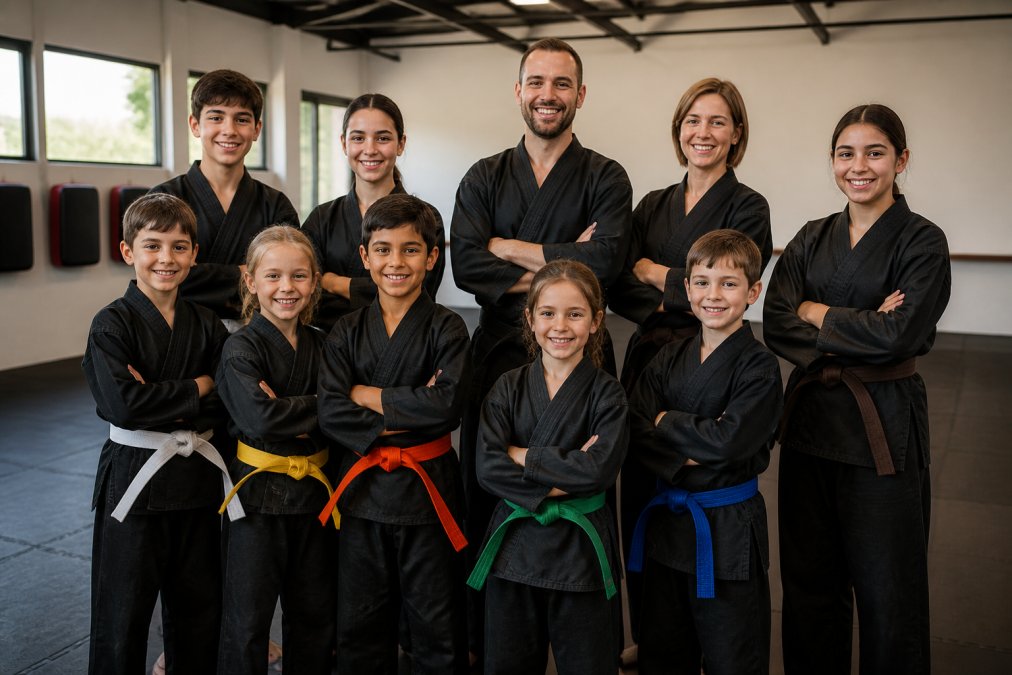
Benefits of Mindset Training for Adults and Kids
Table of Contents
- What Mindset Training Actually Changes
- Fixed Mindset vs. Growth Mindset
- Growth Mindset Exercises for Adults
- Mental Toughness Training Techniques That Work
- The Benefits of Goal Setting in Martial Arts
- Measurable Results: What the Research Shows
- Common Mistakes That Sabotage Mindset Training
- Conclusion
- Frequently Asked Questions
Last Updated: September 13, 2026
What Mindset Training Actually Changes
Mindset training is the deliberate practice of reshaping how you interpret challenge, failure, and effort so that your default response moves from avoidance to engagement. At Great Way Martial Arts, we've taught this alongside physical technique since 1993, fostering confidence, discipline, and strength in children, teens, and adults. Our career instructors utilize a systematized goal-setting system, Brain Gym, and Mindset Training to enhance self-control, focus, and kindness. The benefits of mindset training show up in classrooms, workplaces, and living rooms, not just dojos. Below, we break down how it works, which exercises deliver results, and the mistakes that quietly undo the whole effort.
The mechanism is straightforward. Your brain treats repeated thought patterns like repeated physical movements: the more often a pathway fires, the more automatic it becomes. That principle, neuroplasticity, is why a child who practices reframing a lost match as "what do I try next" eventually stops melting down after losses.
What most guides get wrong is treating mindset as a personality trait you either have or don't. It's a skill, and like any skill it responds to structured practice.
Fixed Mindset vs. Growth Mindset
Fixed mindset is the belief that ability is static: you're good at math or you're not, coordinated or clumsy, and effort only exposes the gap. Growth mindset is the belief that ability develops through strategy, feedback, and sustained practice. The distinction matters because it changes behavior in measurable ways. A fixed-mindset student avoids the harder drill to protect their self-image. A growth-mindset student signs up for it.
That said, nobody lives permanently in one camp. Most people drift between the two depending on the domain. A confident adult can be fully growth-oriented at work and completely fixed about dancing. The work of mindset training is spotting which domain is stuck and why.
A common mistake is praising children for being smart rather than for how they worked. It feels supportive, but it teaches them that their value rests on a trait, which makes challenge feel like a threat. Praise the process instead.
Growth Mindset Exercises for Adults
Adults get the most from mindset training when exercises are short, repeatable, and tied to a real goal. The following five take under fifteen minutes daily and build on each other.

- Reframe journaling. Write one frustration from the day, then rewrite it as a neutral observation plus one next action. "I bombed the presentation" becomes "The opening didn't land; I'll script the first ninety seconds next time."
- Deliberate difficulty blocks. Spend twenty minutes weekly on something you're genuinely bad at. The point is not improvement; it's practicing the feeling of being a beginner without quitting.
- Process praise audit. For one week, note every time you praise yourself or a child for a trait rather than an action. Swap it.
- Failure résumés. List three setbacks and what each taught you. Keep it visible. This builds tolerance for the discomfort that precedes growth.
- Visualization rehearsal. Before a high-stakes event, spend five minutes mentally rehearsing the first two minutes and one recovery from a mistake.
Reframing Language and Self-Talk
The fastest lever is the sentence you say after a mistake. "I can't do this" is a conclusion. "I can't do this yet" is a position. That single word changes what your brain does next: it keeps searching for a strategy instead of closing the file.
Positive self-talk works best when it's specific and honest. "I've handled harder conversations than this" beats "I'm amazing" because your brain accepts it. Vague affirmations get rejected; evidence-based ones get adopted.
Mental Toughness Training Techniques That Work
Mental toughness is the capacity to keep functioning well under pressure, and it's built through controlled exposure, not motivational speeches. Three techniques do most of the work.
- Discomfort tolerance drills. Cold showers, hard workouts, or holding a difficult stance. Small, voluntary discomfort teaches the nervous system that arousal is survivable.
- Box breathing under load. Four counts in, four hold, four out, four hold, practiced while stressed rather than while calm. The skill only transfers if you rehearse it in the state you'll need it.
- If-then planning. Pre-decide your response to the two most likely obstacles: "If I want to skip training, then I'll do ten minutes and reassess."
What most people miss is that toughness isn't the absence of emotion. It's acting well while the emotion is present.
The Benefits of Goal Setting in Martial Arts
Goal setting in martial arts gives abstract effort a visible scoreboard, which is precisely why it transfers to school, work, and home. A student working toward a belt rank learns to break a distant outcome into weekly targets: this drill, this many repetitions, this form correction. That decomposition skill is the same one an adult uses to finish a certification, a renovation, or a return-to-work plan.
The benefits of goal setting in martial arts also include patience. Rank progression can't be rushed, so students practice delayed gratification in a way few other activities demand. A common pattern instructors notice is that students who set process goals stick with training longer than students who only set outcome goals. Process goals are within your control; outcome goals depend on a grading panel, a coach, or a referee.
A Framework You Can Copy
Most goal-setting advice stops at "write it down." A more useful structure is to pair every outcome goal with two process goals and one recovery goal:
- Outcome: Earn the next rank within twelve months.
- Process 1: Attend three classes per week, no exceptions for weather or mood.
- Process 2: Log one form correction after every session.
- Recovery: If a week is missed, return on the next scheduled class rather than waiting for a "fresh start" Monday.
The recovery goal is the one most people skip, and it's the one that determines whether a setback becomes a dropout. This is the same logic behind if-then planning used in workplace resilience programs.
Where This Transfers Outside the Studio
The decomposition habit is portable. A parent who has practiced breaking a belt test into weekly targets can apply the same method to a child's reading goal, a household budget, or a fitness plan. The skill isn't the martial art; it's the ability to convert a vague ambition into a calendar entry you can actually complete. Mastering this process of incremental achievement provides a reliable framework to build child confidence through the steady accumulation of small, tangible victories.
At Great Way Martial Arts, our instructors use a systematized goal-setting system so every student, from our youngest Kung Fu Cubs (Ages 4-5) | Dragons (Ages 6-7) through our Traditional Wing Chun For Adults and H.I.I.T. Kickboxing classes, is always working toward something specific and achievable. The point isn't the belt. It's the habit of aiming.
Measurable Results: What the Research Shows
Most articles on mindset training stay theoretical. This section is different: it treats mindset training like any other workplace or athletic investment and asks what you'd actually track to know whether it's working. You don't need a lab. You need a baseline, a cadence, and a willingness to look at trends rather than single bad afternoons.
Leading vs. Lagging Indicators
The mistake is measuring only lagging indicators, promotion rates, win-loss records, sales numbers, because those move slowly and are influenced by dozens of factors outside mindset. Leading indicators change first and tell you whether the training is taking hold.
| What to Track | Example Signal | Review Cadence |
|---|---|---|
| Persistence | Attempts before asking for help | Weekly |
| Recovery speed | Time to re-engage after a setback | Per incident |
| Self-talk quality | Ratio of "yet" statements to "can't" | Weekly journal |
| Goal attainment | Weekly process targets hit vs. set | Weekly |
| Emotional regulation | Calm-down time after frustration | Monthly |
| Retention | Voluntary participation rate | Monthly |
A Simple ROI Frame for Teams
You don't need a dollar figure to make the case. You need a before-and-after on behaviors that predict retention and performance. A practical frame:
- Baseline for two weeks. Record the leading indicators above without changing anything.
- Run the intervention for six to eight weeks. Short daily reps, not a one-day workshop.
- Re-measure the same indicators. Look for direction of change, not perfection.
- Tie one indicator to one business outcome. For example, if voluntary participation rises, does voluntary turnover fall in the following quarter?
A common pattern reported by coaches and managers is that the first visible shift shows up at home, not at work or in class. Expect weeks, not days, and measure trends rather than single bad afternoons.
What the Research Actually Supports
The strongest evidence base is for the underlying mechanism, not for any single branded program. Neuroplasticity, the brain's capacity to rewire through repeated practice, is well established in the scientific literature. What's less well established is that a specific weekend seminar will change your life. The honest position is that structured, repeated practice changes behavior, and mindset training is one form of that practice.
The Takeaway
The benefit isn't a feeling. It's a measurable shift in how quickly you re-engage after a setback, how many attempts you make before quitting, and how you talk to yourself when something goes wrong. Those are trackable, and they're the numbers that matter.
Common Mistakes That Sabotage Mindset Training
The most common failure is treating mindset training as a lecture rather than a practice. Telling a child to "have a growth mindset" changes nothing; modeling one does. If you quit visibly when something is hard, no curriculum will out-teach that.
Three more pitfalls worth naming:
- Praising effort that wasn't there. Effort praise only works when the effort was real. Otherwise it teaches kids to look busy.
- Skipping the debrief. Setbacks without reflection become just bad memories. Five minutes of "what would you do differently" converts them into data.
- Chasing intensity over consistency. A brutal week followed by a month off beats nothing, but barely. Short daily reps win.
Conclusion
The hard part isn't learning the techniques; it's sustaining them long enough to see the compounding effect, especially when progress feels invisible for the first few weeks. That's where a structured environment helps. Great Way Martial Arts pairs mindset training with Brain Gym and a systematized goal-setting system inside a competition-free studio, so students build self-control, focus, and discipline through consistent practice rather than pressure. Our career instructors adapt to visual, auditory, and kinesthetic learners alike, and we've been doing it in the same community since 1993. Get started with Great Way Martial Arts and give your family a place where resilience is practiced, not just discussed.
Frequently Asked Questions
What is the purpose of mindset training?
Mindset training builds the mental habits that shape how you respond to challenges, setbacks, and feedback. It develops self-awareness, emotional toughness, and the ability to reframe negative thoughts before they derail progress. In practice, this shows up as better focus, steadier stress management, and more consistent follow-through on goals. Programs that combine physical practice with mental conditioning, such as martial arts classes, tend to produce the strongest results because students apply new thinking patterns in real time.
Can mindset training help with stress management?
Yes. Mental toughness training techniques like controlled breathing, positive self-talk, and deliberate reframing give people concrete tools to use when pressure rises. The key is repetition: these skills strengthen with practice, similar to physical conditioning. Over time, the stress response becomes shorter and easier to recover from. For adults dealing with workplace pressure, pairing these techniques with regular physical activity produces the most noticeable change.
What is the difference between a fixed and growth mindset?
A fixed mindset treats ability as static: you are either good at something or you are not. A growth mindset treats ability as trainable through effort, feedback, and repetition. The difference matters most after failure. Someone with a fixed mindset reads a setback as proof of limitation; someone with a growth mindset reads it as information. Growth mindset exercises for adults, such as reframing language and tracking small improvements, help shift this pattern over time.
How do you incorporate mindset training into daily routines?
Start small and attach it to something you already do. A two-minute breathing exercise before a meeting, a written reflection on one challenge you handled well, or a short visualization before practice all count. Consistency matters more than duration. The benefits of goal setting in martial arts, for example, come from reviewing progress weekly rather than setting one big target and forgetting it. Pick one habit, track it for a month, then add another.