Child Confidence Martial Arts: A Parent's Guide
Table of Contents
- How Martial Arts Builds Child Confidence Through Martial Arts
- Benefits of Martial Arts for Children Beyond the Dojo
- Martial Arts for Shy Kids: Creating a Safe Space to Grow
- What to Look for in Kids Martial Arts Classes for Beginners
- Martial Arts for Kids Confidence and Discipline: Choosing the Right Style
- Preparing Your Child for Their First Class
- Supporting Your Child's Progress at Home
- Common Mistakes Parents Make When Starting Martial Arts
- Frequently Asked Questions
Last Updated: October 13, 2026
How Martial Arts Builds Child Confidence Through Martial Arts
Child confidence martial arts isn't just about learning kicks and punches. It's a structured environment where children face small challenges, overcome them, and realize they're capable of more than they thought. Every time a child masters a new technique or earns a belt, they're proving something to themselves. That proof sticks with them.
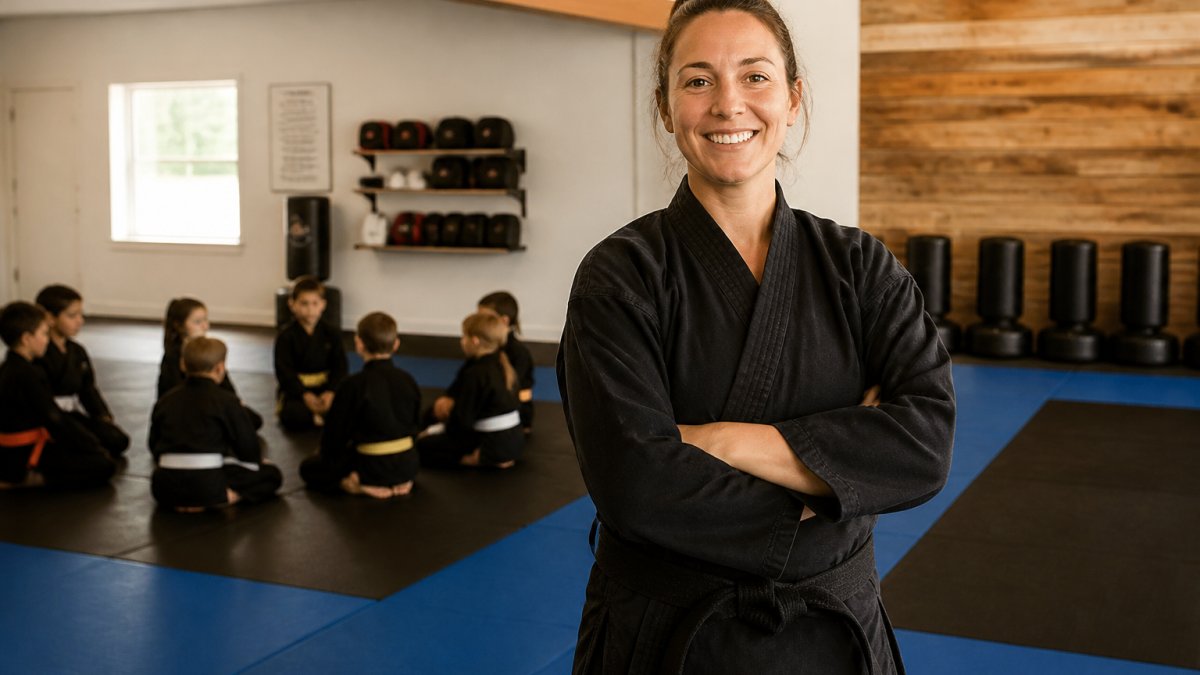
At Great Way Martial Arts, we've watched this transformation happen hundreds of times. A shy kid walks in hesitantly. Within weeks, they're standing taller, speaking up in class, and tackling problems at school with a different attitude.
Child confidence martial arts training works because it combines three elements: clear goals, immediate feedback, and a community that supports rather than judges. When children set a belt rank as their target and train toward it, they're building self-belief through action, not just talk. The physical progress mirrors mental progress. Stronger body, stronger mind.
Benefits of Martial Arts for Children Beyond the Dojo
The benefits of martial arts for children extend far beyond physical fitness. Yes, kids get stronger and more flexible. But the real gains show up at the dinner table, in the classroom, and when they face conflict with friends.
Self-discipline develops naturally through repetition. When a child practices the same form 50 times, they learn that consistency matters. They see that showing up matters. That patience pays off.
Focus improves dramatically. A child learning martial arts must concentrate on body position, balance, timing, and breathing all at once.
Kindness and respect become embedded values. Martial arts training emphasizes respect for instructors, classmates, and yourself. Children learn that strength paired with kindness is powerful. Bullying doesn't fit this framework.
Social connection happens organically. Shy kids find their people in martial arts classes. They're not competing against each other, they're working alongside each other toward shared goals. That removes the pressure and creates genuine friendships.
Martial Arts for Shy Kids: Creating a Safe Space to Grow
Shy children often avoid activities because they fear judgment. Traditional team sports can feel too exposed. Martial arts is different. The focus is on personal progress, not performance in front of others.
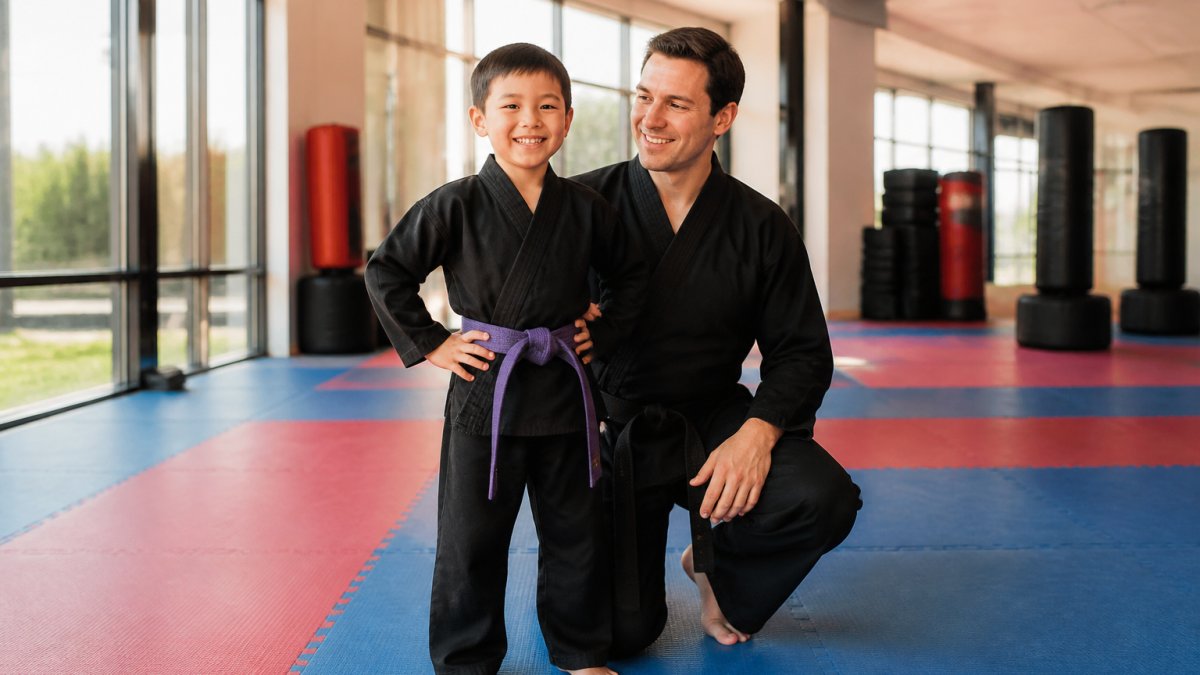
In a non-competitive martial arts environment, a shy child doesn't worry about winning or losing. They worry about improving their own technique. That removes the social anxiety that holds many quiet kids back.
The instructor-student relationship matters enormously. A skilled instructor recognizes that a shy child needs encouragement, not pressure. They celebrate small wins. They give specific feedback that shows they're paying attention.
Peer support replaces peer pressure. When classmates are cheering each other on rather than competing, shy kids feel safe. They see others struggling too. They realize everyone is learning.
Many shy children discover confidence through martial arts because the environment is predictable and supportive. The same instructor. The same studio. The same progression.
What to Look for in Kids Martial Arts Classes for Beginners
Not all martial arts programs are created equal. A great program for beginners looks different from a competitive program. Parents should know what to prioritize when choosing where to start.
Non-competitive learning environments
The best kids martial arts classes for beginners remove the pressure to compete. Tournaments and travel commitments can overwhelm a beginner. Instead, look for programs where progress is measured against the child's own previous performance, not against other students.
Non-competitive doesn't mean unstructured. It means the structure focuses on mastery, not rankings. Belt advancement is based on demonstrating specific skills, not on beating other kids. This approach works especially well for children who are anxious or new to physical activity.
Programs that emphasize personal goals over competition tend to have higher retention rates. Kids stay because they're enjoying the process, not because they feel pressured to win.
Instructors trained in multiple learning styles
Children learn differently. Some are visual learners who need to see the movement. Others are auditory and respond to clear verbal instruction. Kinesthetic learners need to feel the movement and practice it repeatedly.
The best instructors adapt their teaching. They show the technique, explain it, and let students practice and feel it. They watch for signs that a child isn't understanding and adjust on the fly. This requires training and experience.
Ask about instructor qualifications. How long have they been teaching? Have they worked with children with different learning needs? Do they receive ongoing training? A studio that invests in instructor development is a studio that cares about results.
Martial Arts for Kids Confidence and Discipline: Choosing the Right Style
Different martial arts styles develop different strengths. Understanding the differences helps you choose what fits your child best.
Wing Chun for focus and self-control
Wing Chun emphasizes precise hand and arm movements combined with stable footwork. The practice is methodical. Students repeat forms and techniques until they become automatic. This builds incredible focus and self-control.
Wing Chun works well for children who need structure and clear sequences. It appeals to kids who like patterns and predictability.
Kickboxing for energy and empowerment
Kickboxing combines punches and kicks with high-energy movement. It's dynamic and engaging. Children who have a lot of physical energy often thrive in kickboxing because they can channel that energy productively.
Kickboxing builds confidence through physical empowerment. Kids feel stronger.
The combination of upper and lower body work also improves overall coordination and athletic ability.
Great Way Martial Arts offers programs tailored to every age and learning style. Kung Fu Cubs and Dragons (Ages 4-7) focus on foundational movement and fun, while Champions Kung Fu (Ages 8-11) and Teen Martial Arts (Ages 12-16) build deeper technique and discipline. For families looking for high-energy training, H.I.I.T. High Intensity Interval Training offers dynamic kickboxing-style workouts for adults and older teens.
Preparing Your Child for Their First Class
The first class is the most important one. How it goes sets the tone for everything that follows. Parents can do a lot to make it a positive experience.
What to expect on day one
Most beginner classes start with a warm-up to get the body moving. Then the instructor teaches one or two basic techniques. Students practice those techniques multiple times. The class ends with cool-down and stretching.
The pace is intentionally slow. The instructor isn't trying to teach everything, they're trying to make the child feel comfortable and successful. Beginners should leave their first class feeling capable, not overwhelmed.
Wear comfortable clothing that allows movement. Most studios provide loaner uniforms if needed. Arrive 10-15 minutes early so the child can get oriented to the space without feeling rushed.
How to handle nervousness and hesitation
It's normal for a child to feel nervous before their first class. That's okay. Acknowledge the nervousness without trying to fix it. Say something like, "I notice you're feeling a little nervous. That makes sense. New things feel that way sometimes. Let's go check it out."
Avoid saying things like, "You'll be fine" or "There's nothing to be scared of." These minimize their feelings. Instead, normalize the nervousness and show confidence that they can handle it.
If a child refuses to enter the class, don't force it. Sit in the lobby and let them observe. Many children need to watch before they participate. That's a valid way to start. Eventually, curiosity will pull them in.
After the first class, ask open-ended questions: "What was that like?" rather than "Did you like it?" Let them describe their own experience. Celebrate specific moments: "I saw you try that kick three times. You kept going even when it was hard."
Supporting Your Child's Progress at Home
The real magic happens between classes. What parents do at home determines how fast a child progresses and how deeply the confidence builds.
Practice matters, but it doesn't need to be formal. Even 10 minutes of practice per week reinforces what the child learned in class. Ask them to show you a technique.
Talk about progress, not perfection. When your child learns something new, acknowledge the effort: "You worked hard on that kick. It's getting better every time." This builds growth mindset.
Attend demonstrations or belt promotions if available. Seeing their child perform in front of others (without the pressure of competition) builds confidence.
Be consistent. Children thrive with routine. Regular class attendance matters more than sporadic intensive training. Once or twice per week, consistently, builds confidence faster than erratic attendance.
Ask your child's instructor for specific things to practice at home. This gives you concrete direction and shows your child that you're invested in their progress.
Common Mistakes Parents Make When Starting Martial Arts
Parents often sabotage their child's progress without realizing it. Knowing what to avoid helps your child get the most from training.
Mistake 1: Pushing too hard too fast. Some parents enroll their child and then expect rapid progress.
Mistake 2: Comparing to other children. Every child develops at their own speed. One child might nail a technique in two weeks.
Mistake 3: Choosing a program based on cost alone. The cheapest program isn't always the best value.
Mistake 4: Quitting when it gets hard. Around week 4 or 5, many children hit a plateau. They're not learning new things as fast.
Mistake 5: Not communicating with the instructor. If your child is anxious, struggling, or has specific learning needs, tell the instructor.
Mistake 6: Expecting instant behavior change. Martial arts builds confidence and discipline over time, not overnight.
Building child confidence through martial arts is one of the most effective investments a parent can make.
At Great Way Martial Arts in Kelowna, we've been helping families build confident, disciplined children since 1993. Whether your child needs structure, an outlet for energy, or simply a place to belong, we create that space. GET STARTED with a class designed for your child's age and experience level.
Frequently Asked Questions
How does martial arts help build a child's confidence?
Martial arts builds confidence through measurable progress. Children set specific goals, mastering a new kick, earning a belt rank, or perfecting a form, and achieve them consistently. This creates a cycle of accomplishment. Non-competitive environments remove fear of judgment, allowing kids to focus on personal growth. Instructors trained in goal-setting and mindset training help children recognize their own strength and capability, translating that belief into how they approach challenges at school and with peers.
Can martial arts help shy children become more confident?
Yes. Shy children benefit significantly from martial arts for shy kids programs that emphasize personal progress over performance. The structured, predictable nature of classes reduces anxiety, while the supportive community normalizes participation. Instructors adapted to different learning styles, visual, auditory, kinesthetic, help shy children feel understood and capable. Over time, shy kids develop a sense of belonging and competence, which naturally extends to social interactions and speaking up in other settings.
What age should a child start martial arts?
Children can start as early as age 4 through specialized programs designed for younger learners. At this age, programs focus on basic coordination, listening skills, and fun rather than complex techniques. By age 6-7, most children have the focus and physical coordination to progress in traditional martial arts classes. Starting younger builds confidence earlier, but starting at any age produces positive results. The key is finding a program designed for that age group's developmental stage.
How often should children practice martial arts to build confidence?
Consistent practice is more important than frequency. Children who attend classes one to two times per week show steady confidence growth and skill development. Regular attendance creates routine, deepens relationships with instructors and peers, and allows proper progression through techniques. More frequent practice accelerates skill mastery but isn't necessary for confidence building. What matters most is showing up consistently so children experience ongoing achievement and belonging.