Martial Arts for Stress Relief: A Guide to Mental Wellness
Table of Contents
- How Martial Arts Reduces Stress and Cortisol Levels
- Mental Health Benefits of Martial Arts Training
- Mindfulness Training in Martial Arts: Building Emotional Resilience
- How Long Does It Take to See Mental Benefits From Martial Arts
- Physical Conditioning and Sleep Quality: The Stress-Relief Connection
- Building Self-Discipline and Coping Mechanisms Through Training
- Finding Your Style: Choosing the Right Martial Arts for Stress Management
- Frequently Asked Questions
Last Updated: September 20, 2026
How Martial Arts Reduces Stress and Cortisol Levels
When your body faces a stressor, whether it's a work deadline or a personal conflict, your nervous system triggers the release of cortisol, the hormone that prepares you for fight or flight. Chronic stress keeps cortisol elevated, which damages sleep, weakens immunity, and erodes mental clarity. Martial arts training interrupts this cycle by channeling stress into purposeful, high-intensity movement.
High-intensity interval training through martial arts styles like H.I.I.T | High Intensity Interval Training For Adults creates a controlled physical challenge that satisfies your nervous system's activation without the toxicity of real threat. Your body burns off stress hormones through exertion. Over time, regular training teaches your nervous system to recover faster after stress, lowering your baseline cortisol and improving your resilience.
The physical conditioning that comes with martial arts for stress relief also strengthens your cardiovascular system, which directly supports nervous system regulation. When your heart is stronger and more efficient, your body manages stress hormones more effectively. This isn't theoretical, it's how your physiology adapts to consistent training.
At Great Way Martial Arts, the combination of structured goal-setting, mindful movement, and consistent training creates shifts in how people experience and manage daily stress.
Mental Health Benefits of Martial Arts Training
Martial arts training delivers mental health benefits that extend far beyond the training studio. The discipline required to master techniques builds self-control, which transfers directly to emotional regulation in daily life. When you practice controlling your body's movements with precision, you simultaneously develop the ability to control your emotional responses.
The mental clarity that emerges from martial arts training comes partly from the focused attention required during pad work and sparring. Your mind cannot wander to work problems or personal worries when you're concentrating on blocking an incoming strike. This forced present-moment awareness acts as a form of meditation, your brain gets a genuine break from rumination and anxiety.
Many people discover that martial arts training provides emotional catharsis. The physical release of tension through controlled striking and movement allows you to process stress that might otherwise accumulate as anxiety or depression. Unlike suppressing emotions, martial arts gives you a healthy outlet for the intensity building inside you.
The supportive, non-competitive environment matters enormously here. In a community-focused martial arts setting, one without tournaments or pressure to perform, students develop psychological well-being through encouragement rather than comparison. This approach reduces the anxiety that often accompanies traditional competitive sports.
Research from the Canadian Mental Health Association emphasizes that physical activity combined with community support significantly improves mental health outcomes. Martial arts delivers both simultaneously.
Mindfulness Training in Martial Arts: Building Emotional Resilience
Mindfulness in martial arts isn't a separate add-on, it's embedded in how you train. When an instructor teaches you to focus on your breath during a technique, they're teaching you mindfulness. When you learn to observe your thoughts without judgment during a difficult drill, you're building the same mental resilience that formal meditation develops.
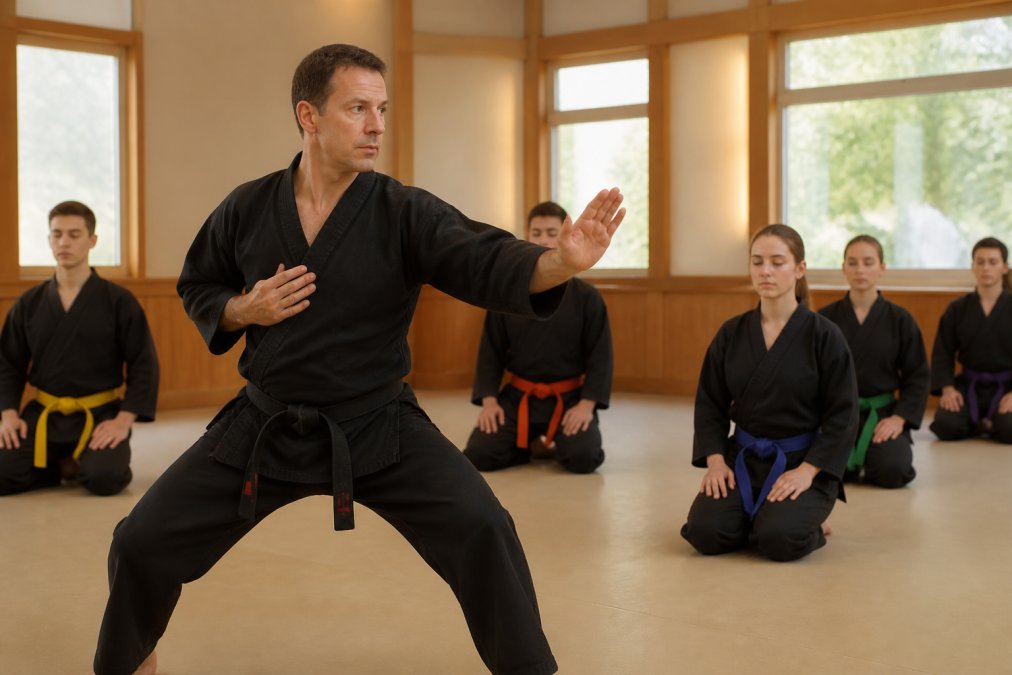
Deep breathing is the foundation of both martial arts technique and nervous system regulation. Controlled breathing during training teaches your body that it can stay calm even under physical stress. This skill transfers to real life: when anxiety rises, you remember how to breathe through it because you've practiced it hundreds of times on the mat.
Emotional resilience, the ability to bounce back from setbacks, develops naturally through martial arts training. Each time you fail at a new technique and try again, you're building resilience. Each time you push through fatigue during a conditioning session, you're proving to yourself that discomfort is temporary and manageable. This repeated experience rewires how you respond to life's challenges.
The mind-body connection in martial arts creates a feedback loop. Your physical practice calms your nervous system, which makes you more emotionally stable. Your improved emotional stability makes you more present during training, which deepens your practice. Over weeks and months, this cycle compounds into genuine transformation.
How Long Does It Take to See Mental Benefits From Martial Arts
The Beginner Anxiety Phase (Week 1-2)
Most people experience significant anxiety before their first class, this is normal and worth naming directly. Adults often worry they're "too old," "too soft," "too out of shape," or "too uncoordinated" to start martial arts. This anxiety is real, and it's the biggest barrier to actually beginning. The good news: this anxiety almost always disappears within the first 1-2 classes once you realize that beginners are expected and that instructors are trained to scale everything to your current fitness level.
During your first week, you'll likely feel self-conscious and uncertain. Your nervous system is in a mild threat state because everything is new. This is temporary. By the end of week two, your brain has categorized the training environment as safe, and the anxiety shifts to excitement. Most people notice the immediate effects within the first week or two: a sense of calm after training, better sleep that night, reduced anxiety the following day. These acute benefits come from the endorphin release and nervous system regulation that happen during and immediately after training.
The Adaptation Phase (Week 3-8)
Deeper mental health benefits, improved focus, better emotional regulation, increased self-discipline, typically emerge within 4-8 weeks of consistent training (at least twice weekly). This is the timeframe where your brain begins to rewire its stress response patterns. You start noticing that situations that previously triggered anxiety no longer affect you as strongly. Your sleep becomes noticeably deeper. You feel less reactive to daily frustrations.
During this phase, your nervous system is learning that the controlled stress of training is manageable, which teaches it that other stressors are also manageable. Your baseline cortisol begins to drop. You might notice you're less irritable, more patient with people, or less prone to catastrophizing.
The Integration Phase (Week 9-24)
Significant transformation in how you experience stress and manage coping mechanisms usually takes 3-6 months of regular training. By this point, martial arts training has become integrated into your nervous system's baseline. Your cortisol levels stabilize at a healthier baseline. Your ability to self-regulate becomes automatic rather than effortful. You've internalized the breathing techniques, the focus practices, and the discipline, they're no longer things you do in the studio, they're how you naturally respond to stress in daily life.
Many practitioners report that around the 12-week mark, they realize they haven't had an anxiety attack in weeks, or they've handled a normally triggering situation with calm they didn't know they had. This is the phase where martial arts stops being "something you do" and becomes "who you are."
Factors That Speed or Slow Your Progress
Consistency matters more than intensity. Someone training twice weekly will see faster results than someone training once monthly. It also depends on the intensity of your training and your willingness to apply the discipline and mindfulness you develop on the mat to your daily life. People who actively practice breathing techniques outside the studio, who journal about their progress, or who combine martial arts with other stress-management practices (therapy, meditation, sleep hygiene) see results 2-3 weeks faster than those who only train.
Your starting point also matters. If you're beginning from high baseline stress or anxiety, you may see results faster (because the contrast is dramatic) but also experience occasional setbacks as your nervous system recalibrates. This is normal and temporary. Integrating complementary practices like acupuncture for anxiety can further stabilize these physiological fluctuations by encouraging the body to maintain a more consistent state of calm during the transition.
How to Know You're Making Progress
Progress isn't always obvious week-to-week. Track concrete markers: How many hours of sleep are you getting? How many times per week do you feel genuinely relaxed? How quickly do you recover from frustration? Do situations that used to trigger anxiety no longer bother you? These are the real measures of change, not how many push-ups you can do or how fast you can throw a kick.
Having clear benchmarks makes the journey feel achievable rather than abstract. Many quality programs use goal-setting systems specifically designed to help students track their progress and stay motivated through this transformation period.
Physical Conditioning and Sleep Quality: The Stress-Relief Connection
Physical conditioning from martial arts training directly improves sleep quality, which is one of the most powerful stress-relief mechanisms your body has. When you sleep well, your nervous system recovers. When you're sleep-deprived, stress hormones remain elevated and your resilience collapses.
High-intensity training like H.I.I.T. Kickboxing creates physical fatigue that promotes deeper, more restorative sleep.
Building Self-Discipline and Coping Mechanisms Through Training
Self-discipline isn't something you're born with, it's a skill you develop through practice. Martial arts training is essentially a systematic program for building self-discipline. Each time you show up to class when you don't feel like it, you strengthen your discipline. Each time you push through a difficult drill, you reinforce your ability to persist.
Finding Your Style: Choosing the Right Martial Arts for Stress Management
Different martial arts styles activate and regulate your nervous system in distinctly different ways. Understanding these neurophysiological differences helps you choose a style that matches your stress profile and nervous system needs.
Frequently Asked Questions
Is martial arts good for anxiety and stress relief?
Yes. Martial arts reduces stress through high-intensity physical activity that lowers cortisol levels, combined with mindfulness techniques and deep breathing. The structured, non-competitive environment allows you to focus entirely on the present moment, which interrupts the anxiety cycle. Regular training builds emotional regulation and coping mechanisms that extend beyond the studio into daily life.
How long does it take to see mental benefits from martial arts?
Most practitioners notice improved mental clarity and reduced tension with consistent training. Deeper benefits like enhanced emotional regulation and sustained stress reduction can emerge over time. The timeline depends on training frequency and your willingness to apply mindfulness techniques outside class. Consistency matters more than intensity.
What makes a competition-free martial arts environment better for stress relief?
Removing tournament pressure eliminates performance anxiety and allows you to focus entirely on personal growth. Without competitive pressure, you can practice at your own pace, experiment with techniques, and develop genuine self-discipline rather than external achievement. This approach reduces cortisol spikes and creates a psychologically safe space where you can process stress through physical movement and mindfulness.
Can martial arts help with burnout and mental fatigue?
Absolutely. High-intensity interval training styles release endorphins and reduce stress-induced fatigue, while mindfulness-based approaches restore mental clarity. The combination of physical exertion and focused breathing activates your parasympathetic nervous system, counteracting the chronic activation caused by burnout. Regular training rebuilds mental resilience and provides an outlet for emotional catharsis.