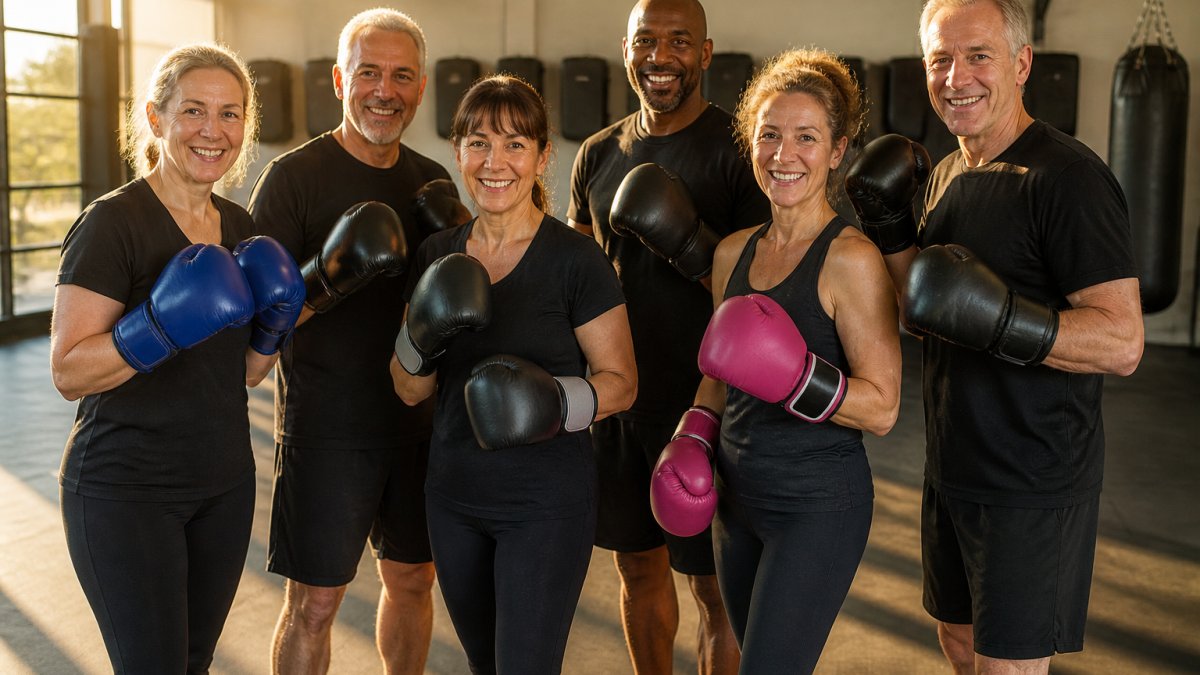
Is HIIT Kickboxing Worth It for Beginners Over Forty?
Table of Contents
- HIIT Kickboxing for Beginners Over Forty: The Honest Verdict
- HIIT Kickboxing for Beginners: What It Actually Demands From Your Body
- Why a Low-Impact Kickboxing Workout Often Beats Full-Intensity HIIT After Forty
- How Often to Do Kickboxing as a Beginner Without Burning Out
- What to Expect in a First Kickboxing Class at a Kelowna Studio
- HIIT Kickboxing vs Other Options for Beginners Over Forty
- Where HIIT Kickboxing Falls Short for Adults Over Forty
- Conclusion: Who Should Start HIIT Kickboxing and Who Should Wait
- Frequently Asked Questions
Last Updated: October 12, 2026
HIIT Kickboxing for Beginners Over Forty: The Honest Verdict
Is HIIT kickboxing worth it for beginners over forty? For most adults in Kelowna who want fitness, stress relief, and real self-defense skills, yes, with one condition: you start in a coached, low-impact-on-ramp program rather than jumping straight into full-intensity rounds. At Great Way Martial Arts, we have taught adults in Kelowna since 1993, and the forty-plus beginners who stick with kickboxing are the ones who respect recovery time.
Here is the honest version most fitness content skips. High-intensity interval training alternates short bursts of hard effort with brief rest periods. Kickboxing adds punches, kicks, and footwork to that structure. The combination is efficient, but it is also demanding on joints, tendons, and your nervous system. Age does not disqualify you. It changes the math.
Below, we break down what a beginner class actually demands, why a low-impact kickboxing workout often beats full-intensity HIIT after forty, and how to know whether you should start now or wait.
HIIT Kickboxing for Beginners: What It Actually Demands From Your Body
A beginner HIIT kickboxing class asks for three things at once: cardiovascular capacity, joint resilience, and the coordination to throw a punch without hyperextending your elbow. Most adults over forty arrive with one or two of those, rarely all three.
How the intervals work in a beginner class
A typical beginner class runs in rounds. You might throw combinations on a heavy bag for 30 to 45 seconds, then rest for 15 to 30 seconds before the next round. A good coach scales the work-to-rest ratio for new students, often starting closer to 20 seconds of work with 40 seconds of rest.
The interval structure is the point. Short bursts let you work harder than you could sustain continuously, and the rest periods are where your heart rate recovers. Skip the rest and you are just doing tired cardio.
Joint load, recovery time, and why age changes the math
Kicks load the hips and knees. Punches load the shoulders and wrists. Pivots load the ankles. None of that is inherently dangerous, but tissue recovery slows with age, and connective tissue adapts more slowly than muscle.
What most guides miss is that the risk is not the kickboxing itself. It is the mismatch between intensity and recovery. A 25-year-old can train hard three days in a row and feel fine. A 45-year-old beginner usually cannot, and pretending otherwise is how people get hurt in week two and quit in week three.
Why a Low-Impact Kickboxing Workout Often Beats Full-Intensity HIIT After Forty
A low-impact kickboxing workout delivers most of the cardiovascular and skill benefits of HIIT with far less pounding on your joints. For beginners over forty, that trade is usually worth taking.
Low impact does not mean low effort. You can raise your heart rate with fast punches, shadowboxing, and footwork without jumping or landing hard. Many adults find they can train three times a week at low impact, where full-intensity HIIT would leave them sore and skipping sessions. Prioritizing these sustainable movements allows for consistent progress, especially when incorporating low impact cardio to support long-term metabolic health.
The training principle here is simple: consistency beats intensity for beginners. Someone who trains three moderate sessions a week for six months will out-improve someone who goes all-out twice and then needs a week off.
How Often to Do Kickboxing as a Beginner Without Burning Out
Two to three sessions per week is the sweet spot for most beginners over forty. That gives your joints and connective tissue time to adapt between sessions while still building a real fitness habit.
Start with two. Add a third only after four to six weeks of consistent training with no lingering soreness. If you are coming from a sedentary stretch, two sessions plus a walk on your off days is a better plan than three hard classes.
Signs you are doing too much:
- Soreness that lasts more than 48 hours
- Waking up tired instead of refreshed
- Nagging wrist, knee, or shoulder discomfort that does not fade
- Dreading class instead of looking forward to it
Signs you can add a session:
- You recover within a day
- Your technique holds up in the last round, not just the first
- You feel energized after class rather than drained
What to Expect in a First Kickboxing Class at a Kelowna Studio
Your first class should feel structured, not chaotic. Expect a warm-up, technique instruction on basics like stance and jab, some bag or pad work, and a cool-down. A good beginner class spends more time on form than on burning you out.
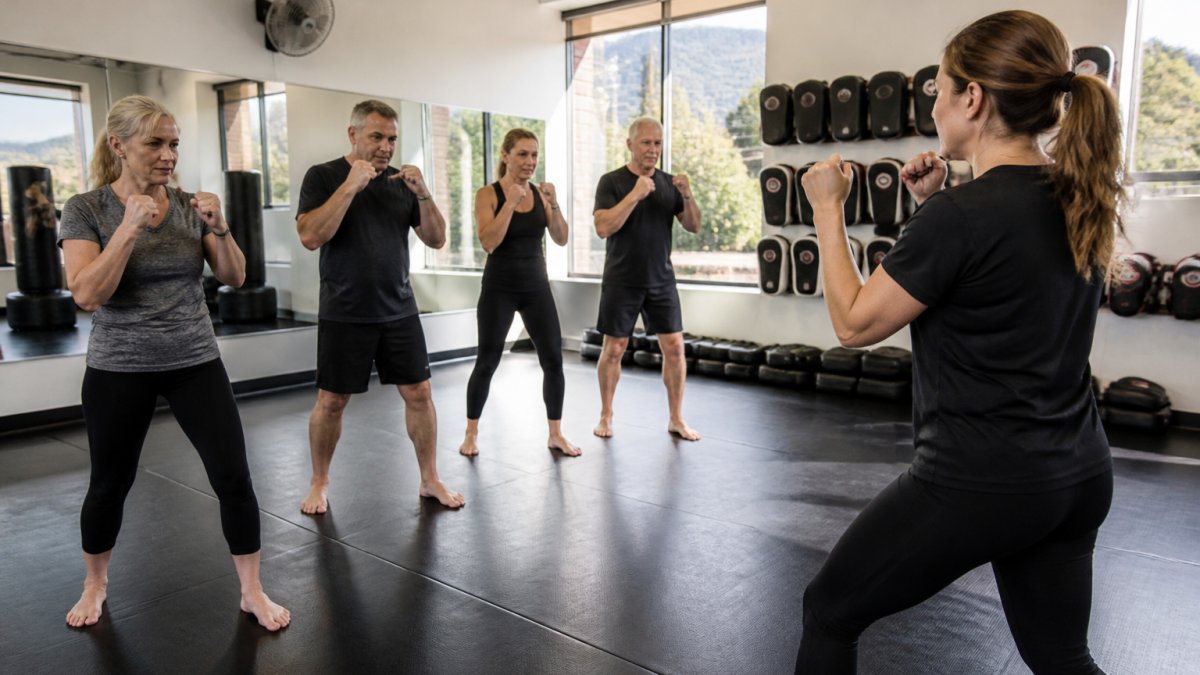
In our Kelowna studio, new adults start with stance, guard, and a single jab before anything else. We pair beginners with a coach who watches for the small things: locked elbows, held breath, weight on the wrong foot. Those details prevent injuries and make the workout more effective.
Come dressed to move, bring water, and tell your instructor about any old injuries before class starts. Most studios, including ours, keep loaner gloves for your first few sessions so you can try the sport before buying gear.
HIIT Kickboxing vs Other Options for Beginners Over Forty
HIIT kickboxing is not the only path, and for some adults it is not the best one. Here is how it stacks up against the options most beginners consider.
| Option | Joint Impact | Skill Building | Recovery Demand | Best For |
|---|---|---|---|---|
| HIIT kickboxing | Moderate to high | High | High | Adults who want fitness plus a skill |
| Low-impact kickboxing | Low | High | Moderate | Beginners over forty, joint history |
| Traditional strength training | Low | Low | Moderate | Building muscle and bone density |
| Steady-state cardio | Low | None | Low | Heart health, low commitment |
| Tai Chi | Very low | Moderate | Very low | Balance, stress relief, recovery days |
The honest read: if your goal is pure strength, lift weights. If your goal is stress relief and balance, Tai Chi is excellent. If you want fitness, coordination, and a skill you can actually use, kickboxing is hard to beat.
For adults who want the martial arts side without the intensity, we also teach Traditional Wing Chun for adults, and Tai Chi works well as a recovery-day complement to kickboxing.
Where HIIT Kickboxing Falls Short for Adults Over Forty
Full-intensity HIIT kickboxing is not for everyone, and pretending otherwise helps nobody. If you have uncontrolled blood pressure, recent joint surgery, or a history of heart issues, get medical clearance first.
A few other honest limitations:
- It is not a complete strength program on its own
- Progress is slower than the fitness marketing suggests
- Group classes vary in quality, and a rushed coach can push beginners too hard
- Without modifications, the jumping and pivoting can aggravate old injuries
Most of these are solvable with the right coach and the right starting intensity. The point is that "worth it" depends on your starting point, not on the workout's reputation.
Conclusion: Who Should Start HIIT Kickboxing and Who Should Wait
Start now if you are reasonably active, injury-free, and want a workout that builds fitness, coordination, and confidence at the same time. Wait, or start with a gentler option, if you are recovering from an injury, have uncontrolled cardiovascular conditions, or cannot commit to two sessions a week.
The beginner who wins is not the fittest one in the room. It is the one who shows up twice a week for three months without getting hurt.
Finding a fitness routine that actually sticks after forty is the hard part. At Great Way Martial Arts, our career instructors have taught adults in Kelowna since 1993, using a systematized goal-setting approach, Brain Gym, and Mindset Training inside a supportive, competition-free environment. Our H.I.I.T. program for adults scales intensity to your starting point, not to someone else's. Get started with Great Way Martial Arts and build fitness that lasts past the first month.
Frequently Asked Questions
Is HIIT kickboxing safe for beginners over 40?
It can be, provided you start with modified intensity and get clearance from a physician if you have joint, heart, or blood pressure concerns. The main risks are knee and shoulder strain from repeated high-impact kicks and punches before your form is solid. A low-impact kickboxing workout that swaps jumping for stepping, and reduces kick height until your hips and hamstrings loosen up, is the safer entry point. Coached classes where an instructor corrects your stance matter more after 40 than at 25.
How often should a beginner over 40 do HIIT kickboxing?
Two sessions per week for the first four to six weeks is a reasonable starting point, with at least one rest day between them. HIIT kickboxing places real demand on your tendons and connective tissue, which recover more slowly after 40 than muscle does. Once two classes feel routine, add a third. Doing five sessions a week in month one is the most common way beginners over forty end up sidelined with a sore knee or shoulder.
Do I need to be fit before starting kickboxing?
No. Beginners over forty walk into their first class at wildly different fitness levels, and a well-run studio scales the work to the person in front of it. What helps more than baseline fitness is consistency: showing up twice a week for a month builds the conditioning that makes the third week feel easier. If you can walk briskly for 30 minutes without stopping, you have enough of a base to begin.
Is kickboxing or regular HIIT better for beginners over 40?
Kickboxing usually wins for this age group because it adds coordination, balance, and rotational movement that a standard HIIT circuit of burpees and box jumps does not. It also tends to hold attention longer, which matters when the real challenge is sticking with a routine. Regular HIIT is simpler to do at home with no equipment. If joint comfort is a concern, a low-impact kickboxing workout gives you the skill work without the pounding.
Can kickboxing help improve fitness and coordination after 40?
Yes. Kickboxing trains you to coordinate upper and lower body at the same time while reacting to a partner or instructor, which is a different skill from lifting weights or running. Balance and reaction time both respond to this kind of practice. The gains show up in ordinary things: catching yourself on an icy sidewalk, carrying groceries up stairs, or moving through a crowded room without stumbling. Progress depends on how regularly you train.