Table of Contents
-
Martial Arts for Kids Personal Development: Beyond Physical Skills
-
How to Choose a Martial Arts School for Kids: Key Evaluation Criteria
Last Updated: September 18, 2026
Why Non-Competitive Martial Arts Matter for Children
Non-competitive martial arts kids represents a fundamental shift in how we approach youth physical development. Rather than chasing medals or tournament rankings, this approach prioritizes personal growth, confidence building, and life skills that extend far beyond the dojo.
The difference is substantial. A child in a non-competitive environment learns to measure success against their own progress, not against peers. They develop resilience through mastery of techniques, not through winning matches. According to Kids Sport Canada's youth development guidelines, programs emphasizing personal achievement over competition show significantly higher long-term participation rates and better mental health outcomes in young athletes.
This matters because childhood is when foundational beliefs about ability and effort take shape. A child who learns that martial arts is about becoming better than they were yesterday develops a growth mindset that carries into academics, relationships, and career. One who learns it's about beating others develops anxiety around performance and often quits when the competition gets tough.
Great Way Martial Arts has built its entire curriculum around this principle since 1993. The focus is simple: help each child develop self-discipline, confidence, and physical fitness without the pressure of tournaments or travel. This non-competitive martial arts for kids approach means instructors can tailor feedback to individual learners, celebrate incremental progress, and create an environment where every student feels they belong.
Martial Arts for Kids Personal Development: Beyond Physical Skills
When parents think of martial arts for kids personal development, many picture physical techniques: kicks, punches, forms. But the real transformation happens in how a child sees themselves and handles challenges.
The physical skills are the vehicle, not the destination. A child learning a new kata isn't just memorizing movements. They're learning to focus attention, follow sequences, persist through difficulty, and take direction. These are the building blocks of self-discipline that show up in homework completion, managing frustration, and handling social conflict.
Character development in non-competitive environments is deliberate. Instructors emphasize respect, kindness, and personal responsibility because there's no competitive hierarchy to create those lessons naturally. A child isn't taught respect because they fear a stronger opponent. They're taught it because it's part of the dojo culture.
Great Way Martial Arts incorporates Brain Gym and Mindset Training alongside physical instruction. This means students aren't just building muscle memory. They're building mental resilience and emotional regulation skills that parents notice at home within weeks.
Martial Arts Classes for Focus and Discipline: What Works
Martial arts classes for focus and discipline work because they create structure without rigidity. A child knows exactly what to expect: warm-up, instruction, practice, cool-down. But within that structure, there's room for individual progress and learning style adaptation.
Focus develops through repetition with purpose. When a student practices a technique fifty times, they're not just becoming physically proficient. They're learning that sustained attention produces results. This translates directly to academic work, where focus is the limiting factor for most children.
Discipline in non-competitive settings is self-generated, not imposed. A child disciplines themselves to practice because they want to improve, not because they're chasing a trophy or avoiding punishment. This internal motivation is far more powerful than external reward systems.
Systematized Goal-Setting and Brain Gym Training
A systematized goal-setting system transforms martial arts classes for focus and discipline from activity into development. Rather than vague aspirations ("get better at martial arts"), students set specific, measurable goals: "Master the three-step form by next month" or "Hold a stance for 30 seconds without wobbling."
This approach works because it makes progress visible. A child can see themselves improving, which builds confidence and motivation. They learn that effort produces results, which is the foundation of a growth mindset.
Brain Gym training enhances this process by integrating movement and cognitive development. Specific exercises improve coordination between brain hemispheres, enhance focus, and support emotional regulation. Combined with martial arts training, it creates a comprehensive approach to child development that addresses physical, cognitive, and emotional growth.
Adapting to Different Learning Styles
Children learn differently. Some are visual learners who need to see a technique demonstrated. Others are auditory learners who benefit from clear verbal instruction. Kinesthetic learners need to feel the movement and adjust through repetition.
Effective martial arts classes for focus and discipline adapt to these differences. An instructor might demonstrate a form (visual), explain the purpose (auditory), then have the student practice while receiving hands-on feedback (kinesthetic). This multi-sensory approach means every child in the class can access the material.
Great Way Martial Arts structures its programs specifically around visual, auditory, and kinesthetic learning styles. This matters because a child who struggles in a one-size-fits-all class may thrive when instruction matches how their brain naturally processes information.
How to Choose a Martial Arts School for Kids: Key Evaluation Criteria
Choosing the right school determines whether your child thrives or quits. The decision goes beyond proximity or price. You're evaluating whether the environment will build confidence, teach discipline, and create a positive relationship with physical activity.
Start by observing a class without your child. Watch how instructors interact with students. Do they correct mistakes harshly or constructively? Do they celebrate effort or only results? Do they adapt when a child isn't understanding? These observations reveal the actual culture, not the marketing narrative.
Ask specific questions about philosophy. "What happens if a child doesn't want to compete?" is revealing. A school that pressures competitive participation isn't truly non-competitive. A genuine non-competitive school has clear answers about how they support students who prefer personal development.
Instructor Stability and Teaching Philosophy
Instructor stability matters more than most parents realize. A child bonding with an instructor, learning their teaching style, and building trust over months is disrupted when that instructor leaves. Frequent turnover signals that the school doesn't invest in its team or that the teaching environment is unstable.
Great Way Martial Arts employs career instructors, which means continuity and deep expertise. A career instructor has invested years in understanding child development, refining their teaching, and building relationships with students and families.
Teaching philosophy determines whether your child develops intrinsic motivation or becomes dependent on external rewards. Ask how the school handles mistakes. Do they use them as learning opportunities? Do they emphasize personal progress over performance? These answers reveal whether the environment will build genuine confidence or fragile ego.
Program Structure and Age-Appropriate Groupings
Age-appropriate groupings ensure that instruction matches developmental stage. A four-year-old has different attention span, physical capability, and emotional needs than an eight-year-old. Schools that mix ages in classes often end up boring older children or overwhelming younger ones. Tailoring these environments to specific maturity levels fosters a sense of personal accountability that serves as a foundation for building character in children through consistent, mindful practice.
Effective programs have clear age groupings with curriculum designed for each stage.
Inclusive and Sensory-Friendly Environments
Not every child learns in a typical classroom or studio environment. Some children have sensory sensitivities, autism spectrum traits, ADHD, or anxiety that makes standard classes challenging. A truly inclusive school acknowledges this and adapts.
What Sets Non-Competitive Programs Apart
The distinction between non-competitive and competitive programs is absolute, not subtle. In competitive programs, the goal is winning. Non-competitive programs have a different goal entirely: personal mastery and character development.
No Tournaments, No Travel Pressure
Non-competitive martial arts kids means no mandatory tournament participation, no pressure to compete, and no travel schedules. This removes a major source of childhood stress.
Parental Observation and Community Involvement
A non-competitive program typically welcomes parental observation. You can watch your child learn, see their progress, and understand what happens in class. This transparency builds trust and lets you reinforce lessons at home.
Program Options for Every Age and Interest
Effective non-competitive schools offer age-specific programs because development needs change. A four-year-old needs movement, play, and short attention spans. A twelve-year-old needs challenge, skill progression, and respect for their growing independence.
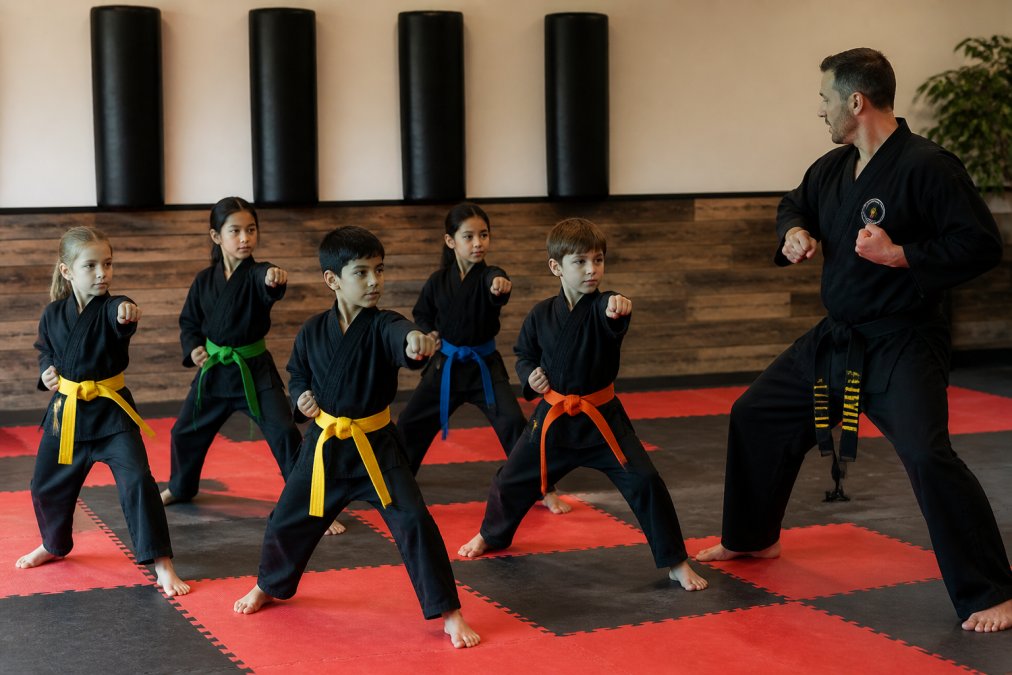
Instructor teaching basic stances to non-competitive martial arts kids in a bright, welcoming studio.
Building Confidence Without Competition
Confidence in non-competitive environments develops through mastery, not victory. A child masters a technique, sees themselves improve, and believes in their capability. This confidence is resilient because it's based on actual skill development, not winning against weaker opponents.

Website Admin
Contact Me